


Can Dental Implants Get Cavities? Common Questions Answered
At CharlottePerio, we've spent more than fifty years helping patients protect the health and beauty of their natural teeth. Over the decades, dental implants have become one of the most transformative tools in our practice, giving patients back their smiles, their confidence, and their ability to chew comfortably. A common question in our consultation room regarding implants is:
"Can my dental implant get a cavity?"
It's a completely understandable question and the short answer might surprise you. Let's walk through everything you need to know.
Quick Answer: Can Dental Implants Get Cavities?
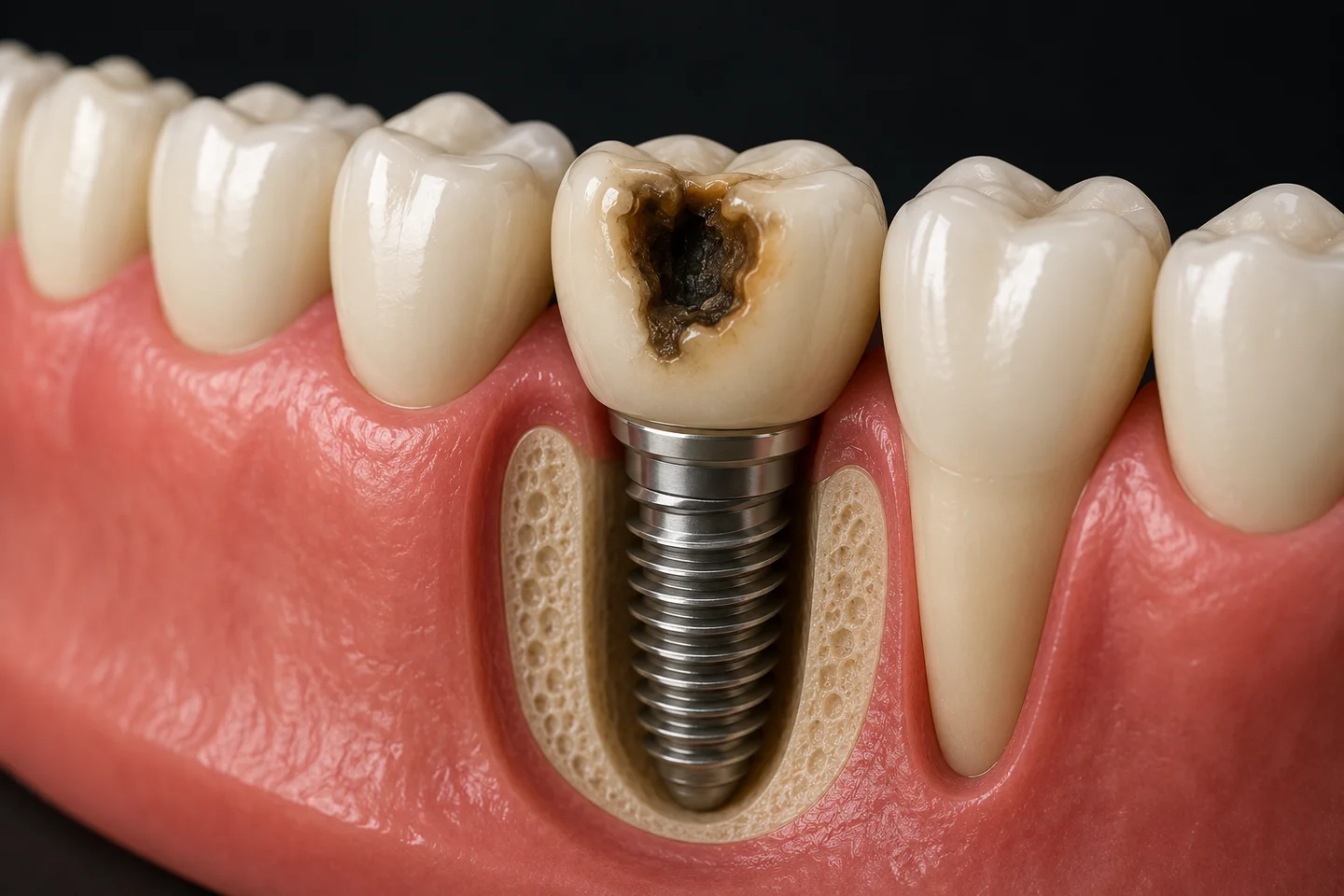
No, dental implants cannot get cavities. The implant crown is made from porcelain, ceramic, or zirconia, and the implant post is made from titanium. None of these materials contain the organic structure that decay-causing bacteria need to erode. Cavities are a disease of natural tooth enamel and dentin, and implants don't contain either.
However, and this is the critical part, dental implants are not maintenance-free. They face their own set of serious concerns that, if ignored, can lead to implant failure.
Key Takeaways
- Implant crowns and posts cannot develop cavities because they are made from non-organic, bacteria-resistant materials.
- Peri-implantitis, a gum and bone infection around the implant, is the biggest threat to implant longevity and is sometimes called "the cavity equivalent" for implants.
- Neighboring natural teeth can still get cavities, which can indirectly compromise an implant.
- Daily brushing, flossing, and regular professional cleanings are essential to keep your implant healthy for decades.
- Smoking, diabetes, and poor oral hygiene are the top risk factors for implant complications.
- Most dental implants last 15–25+ years with proper care.
What Is a Dental Implant, Exactly?
A dental implant is a three-part tooth replacement system: a titanium post surgically placed into the jawbone (acting as the root), an abutment connecting the post to the crown, and a porcelain or zirconia crown visible above the gumline.
Because none of these components are made of living tissue, bacteria cannot eat through them the way they erode natural enamel. Think of it this way: a cavity is essentially rust on a car — it only forms when the underlying material is reactive. Titanium and porcelain are non-reactive. The "rust" of tooth decay simply has nothing to grip.
Why Dental Implants Can't Get Cavities
The Science of Tooth Decay
Cavities form through a well-understood biological process:
- Oral bacteria (especially Streptococcus mutans) feed on sugars and carbohydrates.
- The bacteria produce lactic acid as a byproduct.
- That acid demineralizes tooth enamel and dentin — the organic, calcium-based layers of a natural tooth.
- Over time, this erosion creates a cavity (or dental caries).
Why Implants Are Immune to This Process
Dental implant crowns are fabricated from inert, non-porous materials — typically ceramic, porcelain-fused-to-metal, or zirconia. These materials have no calcium-phosphate mineral structure to dissolve. There is quite literally nothing for the acid to erode.
The titanium implant post is similarly immune. Titanium is biocompatible and non-reactive, which is exactly why surgeons also use it in hip replacements and bone screws.
The Real Threats to Dental Implants
Just because implants are cavity-proof doesn't mean they're invincible. In our decades of periodontal practice, we've seen implants fail and it's almost always due to one of the following reasons.
Peri-Implantitis: The Cavity's Dangerous Cousin
What is peri-implantitis? Peri-implantitis is a bacterial infection of the gum tissue and bone surrounding a dental implant, causing progressive bone loss that can eventually lead to implant failure.
Consider it the implant's version of gum disease and it's serious. According to research published in the Journal of Clinical Periodontology, peri-implantitis affects an estimated 22% of dental implants over a 5–10 year period when oral hygiene is not consistently maintained.
Warning signs include:
- Red, swollen, or bleeding gums around the implant
- Pain or tenderness when pressing on the gum tissue
- A visible gap forming between the implant crown and gum
- Looseness or movement of the implant crown
- Unpleasant taste or odor that won't go away
The good news: peri-implantitis is largely preventable with consistent oral hygiene and professional monitoring which is something our team at CharlottePerio is specially trained to manage.
Implant Crown Damage
While the crown can't decay, it can crack, chip, or fracture under the right conditions. Biting down on ice, hard candy, or using your teeth as tools can damage even the most durable ceramic materials. A cracked crown can harbor bacteria and create hygiene challenges, even if the implant post beneath it remains healthy.
Bone Loss Around the Implant
Successful long-term implants depend on osseointegration, the process by which the titanium post fuses with the surrounding jawbone. Conditions that compromise bone health, including smoking, uncontrolled diabetes, and osteoporosis, can cause the bone to recede away from the implant over time.
Problems with Neighboring Natural Teeth
Here's something many patients don't consider: the teeth surrounding your implant can still develop cavities. If a neighboring tooth develops advanced decay or infection, it can compromise the bone and gum tissue supporting your implant. Protecting your natural teeth is just as important as caring for the implant itself.
How to Care for Your Dental Implant
Good news: implant care is not complicated. It just requires consistency.
Daily Home Care
- Brush twice a day using a soft-bristle toothbrush. Manual or electric both work well, just be thorough.
- Floss daily around the implant. Specialized tools like implant floss, interdental brushes, or a water flosser can be especially effective for cleaning below the gumline.
- Use a non-abrasive toothpaste. Avoid whitening pastes with harsh abrasives that can scratch the crown over time.
- Rinse with an antimicrobial mouthwash if your dentist or periodontist recommends one.
Professional Maintenance
- Visit your dentist or periodontist every 3–6 months for professional cleanings and implant monitoring. Implants need different scaling instruments than natural teeth, always ensure your hygienist is using tools appropriate for implant surfaces.
- Get periodic X-rays to monitor bone levels around the implant. Bone loss caught early is far easier to treat.
- See a periodontist promptly if you notice any of the warning signs of peri-implantitis listed above.
How Long Do Dental Implants Last?
With proper care, dental implants are the most durable tooth replacement option available. Studies show that implant survival rates exceed 95% at 10 years and many patients enjoy their implants for 25 years or more with no major issues.
The long-term success of an implant depends on:
- The skill and technique of the placing surgeon (board certification and experience matter enormously here)
- Implant placement in sufficient bone volume
- Consistent at-home oral hygiene
- Regular professional monitoring
- Control of systemic conditions like diabetes
At CharlottePerio, our board-certified periodontists stay at the leading edge of implant placement techniques through ongoing clinical research and continuing education because what matters to us is not just placing an implant, but ensuring it serves you beautifully for life.
The Bottom Line
Dental implants cannot get cavities but that doesn't mean they take care of themselves. The most common threat to your implant is peri-implantitis, a gum and bone infection that is entirely preventable with good daily hygiene and routine professional care.
At CharlottePerio, our mission for over fifty years has been simple: help you keep a healthy, beautiful smile for as long as possible. Whether we're preserving your natural teeth or helping your dental implants thrive for years to come, you can expect the same personalized care, advanced treatment, and commitment to clinical excellence at every visit.
If you have questions about your dental implant, notice any changes around the implant site, or are considering implants for the first time, we invite you to schedule a consultation with our team. Your smile is worth protecting and we're here to help you do exactly that.
Frequently Asked Questions
Can dental implant crowns stain or discolor?
Yes, though they cannot decay, porcelain and ceramic crowns can pick up surface stains over time from coffee, tea, red wine, and tobacco. Unlike natural teeth, implant crowns cannot be whitened with bleaching agents, so the color you choose at placement is largely permanent. Regular professional polishing helps minimize surface staining, and your dental team can advise on the best crown material for your lifestyle.
Is it normal for gums to recede around a dental implant?
Some minor gum settling after implant placement is normal during healing. However, significant or ongoing gum recession around an implant is not normal and should be evaluated promptly. It can indicate peri-implantitis or insufficient bone support. A board-certified periodontist can assess whether gum grafting or other interventions are needed to protect the implant long-term.
Can I get a cavity under the implant crown?
No, there is no natural tooth structure beneath a properly placed implant crown. In an implant, the titanium post replaces the root entirely, so there is no biological material beneath the crown to develop decay.
How do I know if my dental implant is failing?
The warning signs of implant failure include pain or discomfort when chewing, swollen or bleeding gums around the implant, visible bone recession, a loose or wobbly crown, or a bad taste that won't resolve. If you experience any of these, contact your periodontist immediately. Early intervention can often save a struggling implant.
Can I get a dental implant if I have gum disease?
Active gum disease must be treated before implant placement. Placing an implant in infected or compromised tissue dramatically increases the risk of failure. At CharlottePerio, our team evaluates and treats periodontal disease as a foundational step before recommending implants, ensuring the bone and tissue environment is healthy enough to support long-term implant success.
Do dental implants require special toothpaste or tools?
Use a soft-bristle toothbrush (electric is excellent), avoid harsh abrasive whitening pastes, and consider an interdental brush or water flosser to clean along the gumline around the implant. Your dental team can recommend products tailored to your specific implant design.
Can children or teenagers get dental implants?
Generally, no. Dental implants are not recommended until jaw growth is complete, which typically occurs in the late teens to early twenties (often around ages 17–18 for girls and 18–21 for boys). Placing an implant before growth is complete can result in the implant ending up in the wrong position as the jaw and surrounding teeth continue to develop. A periodontist can evaluate jaw maturity to determine when implant treatment is appropriate.
If a child or teenager loses a permanent tooth before jaw growth is complete, the focus is on preserving the space until an implant can be safely placed. In many cases, a temporary partial denture (often called a "flipper") is made to replace the missing tooth. This appliance maintains the space, restores chewing function, and provides a natural-looking smile while the jaw continues to grow.
This staged approach helps ensure the implant is placed at the right time for the best long-term function, esthetics, and stability.
Contact Us
We provide exceptional dental care tailored to your needs.
Contact Us at: (704) 365-0123
Fax: (704) 364-8640
Email: info@charlotteperio.com
Get in Touch
*Name
*Your Email
*Your Phone Number
Additional Information

Our Professional Affiliations



© 2026 CharlottePerio. All Rights Reserved | Notice of Privacy Practices | Digital Marketing by Remedo