


What Are the Warning Signs of Dental Implant Failure?
Dental implants are designed to provide a long-lasting, stable solution for missing teeth. When properly planned and maintained, they can restore function, appearance, and confidence with exceptional long-term success rates.
Although implant complications are relatively uncommon, problems can occasionally develop during healing or even years after placement. Recognizing the early warning signs of implant failure is important because prompt treatment can often prevent more serious complications.
Early Warning Signs vs. Late Warning Signs
Dental implant complications generally fall into two categories: early complications that occur during healing and late complications that develop after the implant has already been functioning successfully.
Early Warning Signs During Healing
After implant placement, the jawbone must fuse securely to the titanium implant surface through a process called osseointegration. If healing is disrupted, certain symptoms may indicate that the implant is not integrating properly.
Persistent or Worsening Pain
Some soreness after implant surgery is normal. However, pain that becomes more severe instead of gradually improving may indicate infection, excessive pressure, or healing complications.
Ongoing Swelling or Redness
Swelling and mild inflammation are expected during the initial healing period, but these symptoms should steadily improve. Gums that remain significantly swollen, red, or tender may signal an underlying problem.
Implant Mobility
A dental implant should feel stable and secure. Any sensation that the implant or healing component is moving should be evaluated promptly, as movement may indicate failed integration with the bone.
Late Warning Signs of Implant Complications
Even implants that have functioned successfully for many years can develop complications over time.
Receding Gum Tissue
Gums that begin pulling away from the implant may expose portions of the implant surface or crown margin. Gum recession can sometimes indicate inflammation or underlying bone loss around the implant.
Discomfort When Chewing
Dental implants should function comfortably during normal biting and chewing. Pain, pressure, or discomfort while eating may suggest excessive force, inflammation, or changes in the surrounding bone support.
Changes in Stability or Function
An implant restoration that suddenly feels unstable, weak, or different when chewing should be professionally evaluated. In some cases, the issue may involve the implant itself, while in others, it may involve the crown or connecting components.
The Two Most Common Causes of Implant Complications
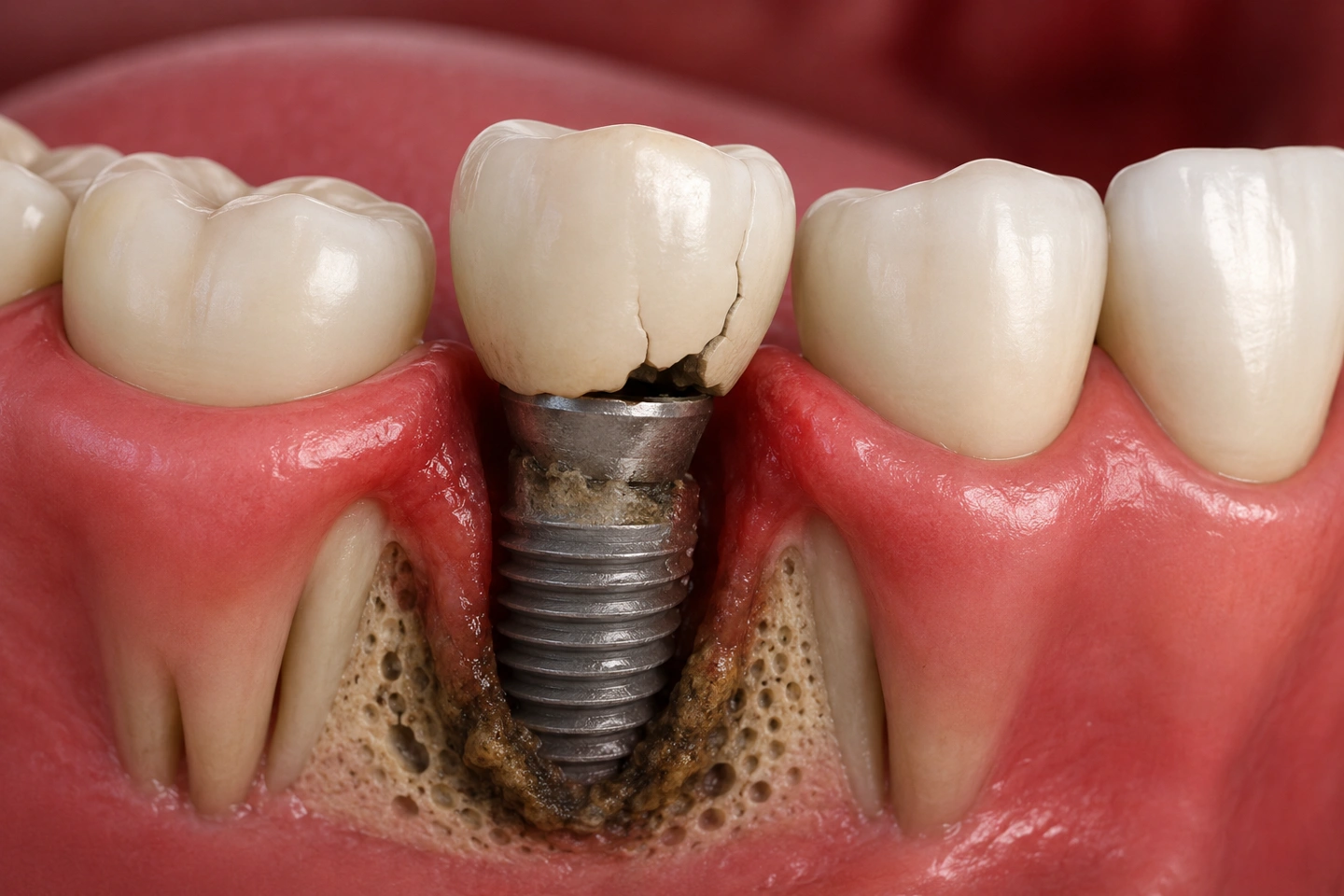
1. Peri-Implantitis
Peri-implantitis is the leading cause of dental implant failure.
This inflammatory condition occurs when harmful bacteria accumulate around the implant, leading to infection of the surrounding gum tissue and bone. In its earliest stage, known as peri-implant mucositis, inflammation is limited to the soft tissue and may be reversible with early treatment.
If left untreated, the infection can progress deeper and begin destroying the bone supporting the implant.
2. Excessive Bite Forces and Bruxism
Dental implants are highly durable, but excessive pressure from chronic teeth grinding or clenching, known as bruxism, can place additional stress on the implant and surrounding bone.
Over time, excessive biting forces may contribute to mechanical complications, component wear, or bone stress around the implant.
Why Periodontal Care Matters
Long-term implant success depends heavily on careful planning, precise placement, and ongoing periodontal health.
At CharlottePerio, advanced diagnostic imaging and detailed treatment planning are used to evaluate bone structure, gum health, and implant positioning before treatment begins. Periodontists receive advanced specialty training focused specifically on gum tissue management, bone preservation, bone grafting, and dental implant placement.
This specialized expertise helps create a strong foundation for long-term implant health and stability.
Protect Your Smile and Your Investment
Dental implants are designed to function as a long-term solution for missing teeth, but maintaining healthy gums and bone remains essential to their success.
If you are experiencing discomfort around an implant, noticing changes in your gum tissue, or simply want to ensure your implants remain healthy, the team at CharlottePerio is here to help. Through specialized periodontal care and advanced technology, we are committed to helping patients maintain healthy, confident smiles for years to come.
Frequently Asked Questions (FAQs)
Can a failing dental implant be saved if it is caught early?
In many cases, yes. Early intervention may allow a specialist to treat the infection or inflammation before significant bone loss occurs. Treatment may include specialized cleanings, antimicrobial therapy, laser treatment, or regenerative procedures depending on the severity of the condition.
What if my implant crown feels loose but the implant itself feels stable?
Sometimes the issue involves the crown or connecting screw rather than the implant itself. A loose crown does not always mean the implant has failed, but it should still be evaluated promptly to prevent additional complications.
Is bleeding around an implant always a sign of failure?
Not necessarily. Bleeding during brushing or flossing may indicate inflammation around the implant, often referred to as peri-implant mucositis. Early inflammation is frequently treatable when addressed promptly.
How should I care for my dental implants at home?
Dental implants should be brushed and flossed daily using gentle, non-abrasive oral hygiene products. Interdental brushes, floss designed for implants, or water flossers may also help clean around the implant restoration effectively.
How often should dental implants be professionally evaluated?
Most patients should continue regular dental and periodontal maintenance visits at least every six months. Some patients with a history of periodontal disease or other risk factors may benefit from more frequent maintenance appointments.
Contact Us
We provide exceptional dental care tailored to your needs.
Contact Us at: (704) 365-0123
Fax: (704) 364-8640
Email: info@charlotteperio.com
Get in Touch
*Name
*Your Email
*Your Phone Number
Additional Information

Our Professional Affiliations



© 2026 CharlottePerio. All Rights Reserved | Notice of Privacy Practices | Digital Marketing by Remedo