



Gum Recontouring: Understanding Treatment for a Gummy Smile
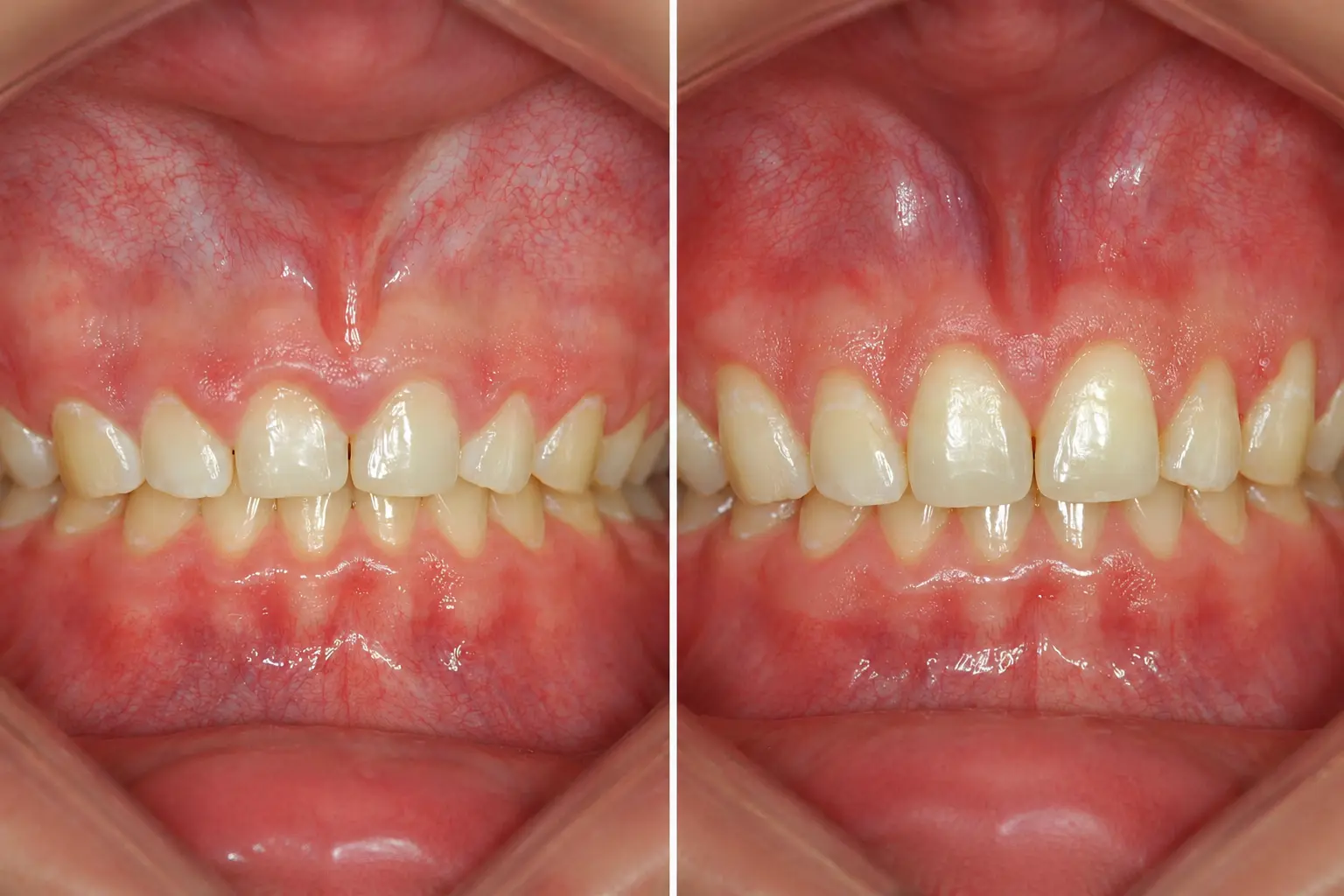
Gum recontouring reshapes excess gum tissue so your teeth and gumline look more balanced. It works best when a gummy smile comes from extra gum tissue or altered passive eruption, and it is less likely to help when lip movement or jaw position is the main cause. A periodontal exam shows which applies to you.
Have you ever looked at a photograph of your smile and noticed that your gums seem more prominent than your teeth? If a large amount of gum tissue shows when you smile, you may have what is commonly called a gummy smile. For some people, this is simply a natural feature. For others, it affects how comfortable they feel sharing their smile.
Gum recontouring is a cosmetic periodontal procedure that reshapes excess gum tissue to create a more balanced appearance between the teeth and gums. Depending on the cause, treatment may involve removing a small amount of gum tissue, adjusting the underlying bone, or addressing another contributing factor.
A periodontist in Charlotte, NC can help you understand why your gummy smile occurs. That is the first step in deciding whether gum recontouring or another approach makes sense.
What Is Gum Recontouring?
Gum recontouring, also called gum reshaping or gum contouring, changes the shape of the gumline. It may be recommended when excess gum tissue covers part of the visible tooth or when the gumline looks uneven from one tooth to the next.
The goal is a better balance between the visible teeth and the gumline, within what your anatomy allows. Treatment can be cosmetic, functional, or both.
Not every gummy smile needs surgery. Some are related to tooth position, jaw development, or how far the upper lip lifts when you smile, and those factors need to be evaluated before treatment is recommended.
What Causes a Gummy Smile?
A gummy smile can develop for several reasons. Identifying the cause helps determine which treatment, if any, is likely to be appropriate.
Excess Gum Tissue Covering the Teeth
Some people have gum tissue that extends farther over the teeth than expected. This can make the teeth look shorter, even when the visible part of the tooth is healthy.
Altered Passive Eruption
During normal tooth development, the gum tissue gradually settles into its adult position as the teeth emerge. When this does not follow the usual pattern, more gum tissue can remain over the tooth crowns.
This is called altered passive eruption, and it can make normally sized teeth look small. In selected cases, crown lengthening may help expose more of the natural tooth.
Upper Lip Movement
The position and movement of the upper lip influence how much gum tissue shows when you smile. Some people naturally lift the upper lip higher than others.
When excess gum display is mainly related to lip movement, gum recontouring alone may not solve it. A periodontal evaluation can clarify whether a gum procedure is likely to improve your smile.
Tooth or Jaw Position
The size and position of the teeth, and the relationship between the upper jaw and the surrounding facial structures, can affect how much gum shows. In these situations, orthodontic or restorative treatment may be relevant. A periodontist can assess the gum tissue and coordinate recommendations with your general dentist and other dental professionals when needed.
Gum Overgrowth
Gum tissue can also thicken because of inflammation, certain medications, or orthodontic appliances. When overgrowth adds to the gummy look, treating the underlying cause comes first.
How Does Gum Recontouring Work?
The process begins with an examination of the teeth, gums, and supporting structures. Your periodontist looks at the gumline, tooth proportions, periodontal health, and the likely cause of the excess gum display.
Step 1: Periodontal Evaluation
Before any cosmetic treatment, it is important to check gum health. A thorough periodontal evaluation looks for inflammation, periodontal disease, or other concerns that may need attention first, and for the relationship between the gum tissue and the underlying bone.
Step 2: Individualized Treatment Planning
Once the cause is understood, your periodontist explains the available options. Some patients benefit from reshaping gum tissue alone. Others need a crown lengthening procedure that also adjusts the bone to establish a stable, appropriate gumline. The extent of treatment depends on your anatomy, periodontal health, and goals.
Step 3: The Procedure
Local anesthesia numbs the treatment area to minimize discomfort. The periodontist then reshapes the tissue according to the treatment plan, using the technique that suits the clinical situation. If dental anxiety is a concern, ask about our conscious sedation options.
Step 4: Healing and Follow-Up
Afterward, your periodontist provides instructions for oral hygiene, eating, and protecting the treated area, similar to our general postoperative instructions. Temporary tenderness or swelling may occur, and healing varies with the procedure and the individual. Follow-up visits let the team check healing and answer questions.
What Are the Benefits of Gum Recontouring?
For appropriately selected patients, gum recontouring may offer several benefits:
- A more balanced smile: Reshaping excess gum tissue may improve the visible proportions of the teeth and gums.
- A more even gumline: Treatment may help even out contours that make some teeth look shorter than others.
- Improved tooth visibility: When excess gum tissue covers healthy tooth structure, treatment may expose more of the natural tooth.
- Restorative planning: In selected cases, crown lengthening exposes enough tooth structure to support a planned restoration.
Results depend on the cause of the gummy smile and the procedure performed. Gum recontouring does not address every reason for excess gum display, and improvement varies from person to person.
Is Gum Recontouring the Same as Crown Lengthening?
Gum recontouring and crown lengthening are related, but they are not identical.
- Gum recontouring: Reshapes the gumline for a more even, balanced look, usually without involving the bone.
- Crown lengthening: Exposes more of the tooth by adjusting gum tissue and, when clinically indicated, the underlying bone.
- Common reasons for recontouring: A gummy smile or an uneven gumline.
- Common reasons for crown lengthening: Altered passive eruption, or access to enough tooth structure to place a restoration.
Your periodontist can explain which approach fits your needs after examining your teeth and supporting structures.
What if Gum Recontouring Is Not the Right Fit?
If lip movement, tooth position, or jaw anatomy is the main driver of your gummy smile, other approaches may serve you better. These can include orthodontic treatment, restorative work on the teeth, or treatments aimed at lip movement. Some of these involve your general dentist or another specialist, and our periodontists coordinate with them when your care spans more than one specialty.
Is Gum Recontouring Right for Everyone?
Gum recontouring may suit people whose gummy smile is mainly caused by excess gum tissue or altered passive eruption. It is not the right solution for every patient. Your evaluation should consider:
- The health and thickness of the gum tissue.
- The position of the teeth and underlying bone.
- The amount of gum tissue visible when you smile.
- The movement and position of the upper lip.
- Existing periodontal conditions and oral hygiene.
- Your expectations and treatment goals.
If periodontal inflammation or disease is present, it may need to be treated before cosmetic work begins. Gum tissue and facial anatomy vary, so a particular result cannot be guaranteed.
What Should You Expect During Recovery?
Recovery depends on the type and extent of treatment. Mild discomfort, swelling, or sensitivity may occur after gum recontouring or crown lengthening. Your periodontist will explain how to clean your teeth without irritating the area, which foods are more comfortable during early healing, and whether to adjust your usual routine temporarily.
Avoid disturbing the surgical site and follow the instructions from your periodontal team. Contact the office if you notice increasing pain, persistent bleeding, or swelling that worsens instead of improving.
Does Insurance Cover Gum Recontouring?
Coverage depends on your plan and on whether the treatment is cosmetic or needed for a restorative or periodontal reason. Purely cosmetic procedures are often not covered, while crown lengthening for a planned restoration may be treated differently. Our team can review costs and insurance with you at your consultation.
Choosing a Periodontist for Gum Recontouring in Charlotte, NC
If you are concerned about excess gum display or an uneven gumline, a periodontal evaluation can identify what is contributing to your smile’s appearance. Gum recontouring may be an option when excess gum tissue is the main concern, while other approaches may be considered when tooth position, lip movement, or jaw anatomy plays a larger role.
CharlottePerio has served the Charlotte community for more than 50 years. Our board-certified periodontists evaluate the gum tissue and supporting structures to give individualized recommendations based on your periodontal health and goals, and we work alongside your general dentist when your care involves more than one specialty.
Ready to find out what is behind your gummy smile? Call CharlottePerio at (704) 365-0123 or schedule a consultation to talk with one of our periodontists.
Frequently Asked Questions on Gum Recontouring
Does Gum Recontouring Hurt?
Local anesthesia numbs the treatment area and minimizes discomfort during the procedure. Some tenderness or swelling may occur afterward, and the experience varies with the extent of treatment and your individual healing.
How Long Does Gum Recontouring Take?
It depends on how many teeth are treated, how much tissue is involved, and whether bone reshaping is needed. Your periodontist can give a more specific estimate after evaluating your smile.
Is Gum Recontouring Permanent?
It can produce lasting changes to the gumline, but long-term results depend on the procedure, healing, oral hygiene, and your tissue response. In some cases, gum tissue can rebound if the underlying bone position is part of the problem, which is one reason a thorough evaluation matters.
Can Gum Recontouring Treat Every Gummy Smile?
No. It is most appropriate when excess gum tissue contributes significantly to the appearance. If lip movement, tooth position, or jaw anatomy is the primary cause, another approach may be more suitable.
Is Gum Recontouring the Same as Laser Gum Contouring?
Not necessarily. Gum recontouring describes the goal of the treatment, while a laser is one method that can be used to modify soft tissue. Which technique is appropriate depends on your clinical findings and the procedure needed.
Will My Teeth Look Longer After Gum Recontouring?
They may look longer when excess gum tissue covered part of the natural tooth. The amount of visible tooth and the final gumline depend on your underlying anatomy and the treatment performed.
Does Insurance Cover Gum Recontouring?
It depends on your plan and the reason for treatment. Cosmetic procedures are often not covered, while treatment needed for restorative or periodontal reasons may be handled differently. Our team can go over this with you at your visit.
How Soon Can I Return to Normal Activities?
Many patients return to their usual routines fairly quickly, but timing varies with the extent of treatment. Your periodontist will tell you when it is appropriate to resume normal activity and eating.
Contact Us
We provide exceptional dental care tailored to your needs.
Contact Us at: (704) 365-0123
Fax: (704) 364-8640
Email: info@charlotteperio.com
Get in Touch
*Name
*Your Email
*Your Phone Number
Additional Information

Our Professional Affiliations



© 2026 CharlottePerio. All Rights Reserved | Notice of Privacy Practices | Digital Marketing by Remedo