


Signs of Receding Gums You Shouldn't Ignore
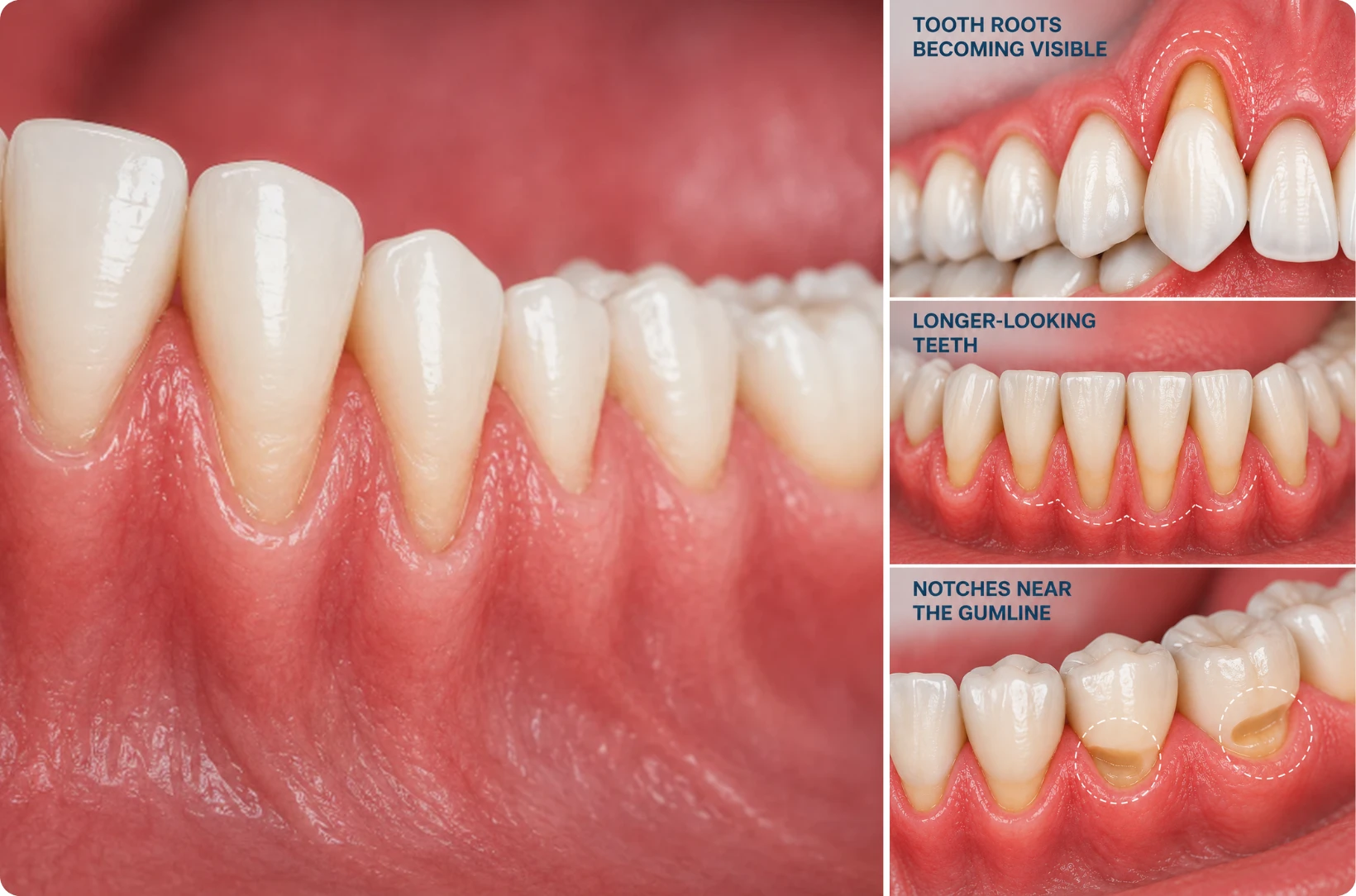
Gum recession often develops gradually, which means you may not notice it right away. For some people, the first clue is increased tooth sensitivity. Others notice that a tooth looks longer, the gumline appears uneven, or part of the root surface has become visible.
Receding gums do not necessarily cause pain, so visual changes can be just as important as changes in how your teeth feel.
Understanding the signs of gum recession can help you recognize when it may be time for a periodontal evaluation.
Key Takeaways: Signs of Receding Gums
- Teeth may appear longer as more of the root surface becomes exposed.
- New or increased sensitivity can occur when recession exposes the tooth root.
- An uneven gumline may indicate localized areas of recession.
- Exposed root surfaces can look different in color or texture from tooth enamel.
- Notches or grooves near the gumline may occur along with recession but can also represent loss of tooth structure.
- Gum recession generally does not reverse on its own.
- Not every area of recession requires surgical treatment. The cause, severity, progression, symptoms, and health of the surrounding tissues all influence treatment recommendations.
What Is Gum Recession?
Gum recession occurs when the margin of the gum tissue moves away from its previous position on the tooth, exposing more of the root surface.
The crown of a tooth is covered by enamel, but the root surface is not. When the root becomes exposed, some patients experience increased sensitivity. Exposed roots may also be more susceptible to root-surface decay and wear.
Recession can affect a single tooth, several teeth, or multiple areas throughout the mouth. It can also vary considerably in severity.
What Do Receding Gums Look Like?
Because gum recession often develops without pain, changes in appearance may be among the first things a patient notices.
Teeth That Look Longer
One of the most recognizable signs of gum recession is a tooth that appears longer than the teeth around it.
The tooth itself has not grown. Instead, the gum margin has moved, exposing more of the root surface.
An Uneven Gumline
Recession does not always occur evenly.
One tooth may have significantly more root exposure than the neighboring teeth, creating an uneven appearance along the gumline. Localized recession like this is common and may be associated with several different contributing factors.
An Exposed Root Surface
As recession progresses, part of the tooth root may become visible.
The exposed root can look slightly different from the enamel-covered crown of the tooth and may have a different texture or shade.
A Notch or Groove Near the Gumline
Some patients notice a notch, groove, or indentation where the tooth meets the gum.
It is important to distinguish between recession of the gum tissue and loss of tooth structure. These conditions can occur together, but they are not the same thing.
Non-carious cervical lesions, sometimes referred to as abfraction lesions depending on their characteristics and suspected cause, can create a visible defect near the gumline. A dental professional can determine whether the area represents gum recession, tooth structure loss, or a combination of both.
What Does Gum Recession Feel Like?
Gum recession may not cause any symptoms at all.
When symptoms are present, one of the most common is tooth sensitivity.
Increased Tooth Sensitivity
An exposed root surface may become sensitive to:
- Cold foods or beverages
- Hot foods or beverages
- Sweets
- Toothbrushing or touch
The root surface is not protected by enamel in the same way as the crown of the tooth. When it becomes exposed, changes in temperature or other stimuli may be more noticeable.
Sensitivity has many possible causes, however, so it should not automatically be assumed to be gum recession.
Bleeding or Tender Gums
Bleeding and tenderness are not caused by recession itself in every case.
However, recession can occur in patients who also have gingival inflammation or periodontal disease. Persistent bleeding, swelling, or tenderness should be evaluated to determine the underlying cause.
What Causes Gum Recession?
There is not one single cause of gum recession. In many patients, several factors contribute.
Potential factors include:
- Periodontal disease and loss of supporting tissues
- Thin or delicate gum tissue
- Tooth position within the jawbone
- Traumatic or overly aggressive brushing
- Orthodontic tooth movement in certain situations
- Repetitive mechanical trauma
- Tobacco use
- Oral piercings
- Other anatomical and functional factors
Because the cause can differ considerably from one patient to another, identifying recession is only the first step. Understanding why it developed is important when deciding whether treatment is necessary and how to reduce the risk of progression.
How Can You Tell If Your Gums Are Receding?
You may notice changes at home, but accurately diagnosing and measuring recession requires a dental examination.
Changes worth mentioning to your dentist or periodontist include:
- A tooth that appears longer than it used to
- A newly visible root surface
- An uneven or changing gumline
- New or increasing sensitivity
- A notch or groove near the gumline
- Changes that appear to be progressing over time
Photos can sometimes help you recognize changes in your smile, but they cannot determine the severity or cause of recession.
During a periodontal examination, the gumline and supporting tissues can be evaluated and recession can be measured to help determine whether an area is stable or changing.
Does Gum Recession Grow Back on Its Own?
Receded gum tissue generally does not return to its previous position on its own.
That does not mean every area of recession requires surgery.
Some areas may remain stable and can be monitored, particularly when the underlying contributing factors are identified and addressed.
When recession is progressive, affects the health or stability of the surrounding tissues, causes significant sensitivity, or creates other clinical concerns, periodontal treatment may be considered.
In appropriate cases, Cosmetic Periodontal Procedures, including gum grafting, can increase tissue thickness and may provide root coverage.
Does Every Case of Gum Recession Need a Gum Graft?
No.
The decision to recommend treatment depends on more than how the recession looks.
A periodontist may consider:
- Whether the recession is progressing
- The amount and type of gum tissue present
- Root exposure
- Tooth position
- Bone support
- Tooth sensitivity
- Oral hygiene
- Periodontal health
- Patient concerns and treatment goals
Some patients benefit most from monitoring and changes to home care, while others may benefit from periodontal treatment.
The goal is to determine the most appropriate approach for the individual tooth and patient.
When Should You See a Periodontist for Receding Gums?
Consider having the area evaluated if you notice:
- A tooth that appears increasingly long
- New or increasing root exposure
- An uneven or changing gumline
- Persistent tooth sensitivity
- A notch or groove near the gumline
- Persistent bleeding, swelling, or tenderness
- Changes that seem to be progressing
A periodontal evaluation can determine whether recession is present, measure its extent, evaluate the surrounding gum and bone, and help identify contributing factors.
At CharlottePerio, our board-certified periodontists evaluate gum recession in the context of the patient's overall periodontal health. Treatment recommendations are based on the cause and severity of the recession, the health of the supporting tissues, symptoms, and the patient's individual needs.
The Bottom Line
Gum recession can be easy to overlook because it often develops gradually and may not cause pain.
Longer-looking teeth, exposed roots, an uneven gumline, and new sensitivity are all changes worth paying attention to. A notch near the gumline may also be present, although this can represent loss of tooth structure rather than recession itself.
Identifying the cause is just as important as identifying the recession.
CharlottePerio has provided periodontal care in Charlotte for more than 50 years. Our board-certified periodontists evaluate gum recession and the supporting tissues to determine whether an area can be monitored or whether periodontal treatment may help protect the tooth and surrounding tissues.
Frequently Asked Questions on Signs of Receding Gums
What do receding gums look like?
Receding gums can make a tooth appear longer because more of the root surface has become exposed. You may also notice an uneven gumline or a difference in the color or texture of the exposed portion of the tooth.
How can I tell if my gums are receding?
Look for changes such as longer-appearing teeth, visible root surfaces, an uneven gumline, or new sensitivity. A dental professional can confirm whether recession is present and measure its extent during an examination.
What is the first sign of gum recession?
There is no single first sign for every patient. Some people notice sensitivity, while others first recognize a change in the appearance of a tooth or gumline. Gum recession can also occur without noticeable symptoms.
Can receding gums grow back on their own?
Receded gum tissue generally does not return to its original position without treatment. However, not every case requires surgery. Depending on the circumstances, an area may simply need to be monitored. Cosmetic Periodontal Procedures, including gum grafting, may be considered when additional tissue or root coverage is indicated.
Why are my gums receding on only one or two teeth?
Localized recession can be influenced by tooth position, gum thickness, brushing habits, periodontal disease, mechanical trauma, or other anatomical factors. An examination can help determine which factors may be contributing in a particular area.
Is a notch near my gumline the same as gum recession?
Not necessarily. A notch or groove can represent loss of tooth structure near the gumline and may occur with or without gum recession. Your dentist or periodontist can evaluate whether the area involves recession, tooth structure loss, or both.
When should I see a periodontist about receding gums?
Consider an evaluation if you notice visible root exposure, changes in the position of your gumline, increasing sensitivity, or an area that appears to be progressing. A periodontist can evaluate the gum tissue and supporting structures and determine whether monitoring or treatment is appropriate.
Contact Us
We provide exceptional dental care tailored to your needs.
Contact Us at: (704) 365-0123
Fax: (704) 364-8640
Email: info@charlotteperio.com
Get in Touch
*Name
*Your Email
*Your Phone Number
Additional Information

Our Professional Affiliations



© 2026 CharlottePerio. All Rights Reserved | Notice of Privacy Practices | Digital Marketing by Remedo