



What Is a Gum Graft? Types of Grafting Procedures Explained
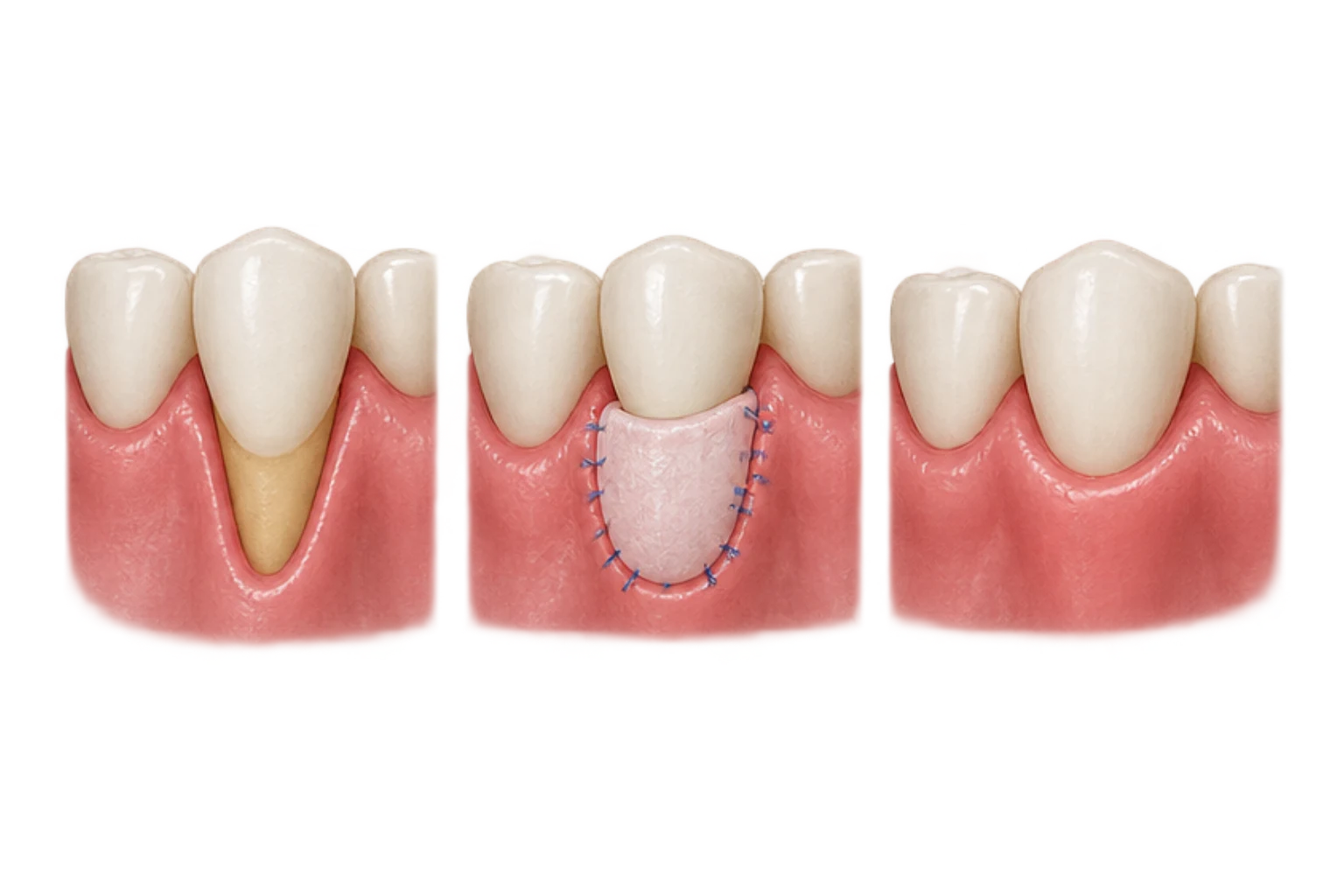
If your gums have receded and exposed part of a tooth root, your dentist may recommend an evaluation with a periodontist. In some cases, a gum graft can help restore tissue around the affected tooth.
But what is a gum graft, exactly?
A gum graft is a periodontal procedure that adds gum tissue to an area where the tissue has become too thin or has receded. Depending on the situation, the graft may be used to cover an exposed root, increase the thickness of the gum tissue, or improve the stability of the gumline.
There are several gum grafting procedures, and they are not interchangeable. The appropriate technique depends on the location and severity of the recession, the condition of the surrounding tissues, and the treatment objective.
What Is Gum Grafting?
Gum grafting is a type of periodontal surgery used to add tissue to an area affected by gum recession or inadequate gum tissue.
When gums recede, the root surface can become exposed. Root surfaces are more vulnerable to sensitivity and decay than enamel-covered tooth surfaces.
A gum graft can place additional tissue over the exposed or vulnerable area. The American Academy of Periodontology notes that gum graft surgery may cover exposed roots, help prevent additional recession and bone loss, and reduce tooth sensitivity.
The purpose of treatment varies from patient to patient.
Why Would Someone Need a Gum Graft?
Protecting an exposed tooth root
One common reason for gum grafting is root exposure caused by recession.
The exposed root can be difficult to keep comfortable and clean, especially when it is sensitive to cold or touch.
Adding tissue may provide additional protection.
Increasing gum tissue thickness
A graft may also be used to increase the amount or thickness of gum tissue around a tooth.
This can be particularly relevant when the existing tissue is thin and vulnerable to further recession.
Addressing progressive recession
If recession is continuing to progress, simply observing the area may not be the best approach.
Your periodontist will consider what is causing the recession and whether adding tissue could provide greater protection.
Reducing sensitivity
Exposed roots can become sensitive because they lack the protective enamel found on the crown of the tooth.
When appropriate, gum grafting may reduce root sensitivity by covering the exposed area or increasing tissue coverage.
What Happens Before Gum Graft Surgery?
Gum graft treatment begins with an examination, not surgery.
The periodontist evaluates the affected teeth and surrounding tissues. This can include measuring gum recession and periodontal pockets, assessing gum thickness, evaluating the supporting bone, and considering factors such as tooth position and oral hygiene.
The goal is to determine whether grafting is appropriate and, if so, which approach makes sense.
Not every patient with gum recession needs a gum graft.
What Are the Different Types of Gum Grafts?
Connective tissue graft
A connective tissue graft is commonly used for root coverage.
The periodontist obtains connective tissue from beneath the surface tissue of the palate and places it at the recession site.
The technique allows the surgeon to add tissue while preserving the appearance of the surface of the palate.
Connective tissue grafting is widely used in periodontal treatment of localized recession. The American Academy of Periodontology's clinical literature resources include extensive research on connective tissue graft procedures and root coverage.
Free gingival graft
A free gingival graft uses a piece of tissue taken from the palate and transfers it to another area.
This approach can be useful when the goal is to increase the amount of keratinized gum tissue rather than simply cover an exposed root.
The choice between a free gingival graft and another technique depends on the anatomy and treatment objective.
Pedicle graft
A pedicle graft uses gum tissue that remains attached to its original blood supply.
Rather than completely removing the tissue from the donor site, the periodontist repositions tissue from an adjacent area over the recession.
This technique is only appropriate when sufficient tissue is available next to the affected tooth.
Donor tissue and other graft materials
In selected cases, a periodontist may use a processed donor material rather than tissue taken from the patient's palate.
Donated human tissue used for dental grafting is obtained through regulated tissue banking processes and is processed and sterile before clinical use.
Your periodontist can explain why a particular graft material is appropriate for your case.
How Does a Gum Graft Work?
During a gum graft procedure, the periodontist prepares the treatment area and positions graft tissue where additional coverage or thickness is needed. Depending on the technique, tissue may be obtained from the patient's palate or from a processed, sterile donor source.
The graft is typically secured with sutures to help stabilize it during healing. Over time, the graft becomes incorporated into the surrounding tissue as the area heals and matures.
The specific approach depends on the type of graft, the condition of the surrounding tissues, and the goals of treatment.
Is Gum Graft Surgery Painful?
Local anesthesia is used to numb the treatment area and minimize discomfort during the procedure. You may feel pressure or movement, but the goal is to keep you comfortable throughout treatment.
Afterward, some soreness, swelling, or sensitivity is expected. The amount of discomfort depends on the procedure, the number of teeth treated, the donor site, and individual healing.
Postoperative instructions are important because the graft needs to remain undisturbed during the early healing period.
What Is Recovery Like After Gum Grafting?
Recovery varies.
Many patients can return to normal work or school activities relatively quickly, although the surgical area requires protection while it heals. Gum graft recovery commonly takes about one to two weeks, with individual variation.
Your periodontist may recommend:
- Soft foods during the early healing period
- Avoiding strenuous exercise temporarily
- Avoiding direct brushing or flossing of the graft until instructed
- Taking medications as directed
- Attending follow-up appointments
- Avoiding pressure or trauma to the surgical area
Do not make changes to your postoperative instructions based solely on general information. Your own surgical site may require different care.
What Should You Eat After Gum Graft Surgery?
Your periodontist will provide specific dietary instructions.
In general, softer foods are easier to manage during the early recovery period. Foods that are very hard, crunchy, spicy, or difficult to chew may irritate the surgical area.
You may gradually return to a normal diet as healing progresses and your periodontist gives you clearance.
How Long Does a Gum Graft Take to Heal?
Initial healing occurs over the first several days and weeks, but the tissue continues to mature beyond that period.
Recovery commonly takes approximately one to two weeks, although individual healing varies.
Your periodontist will determine when the graft is sufficiently healed for you to resume normal brushing and flossing around the treated area.
Is Gum Grafting the Same as Bone Grafting?
No. These procedures address different tissues.
A gum graft adds or repositions soft tissue around the teeth. Bone grafting adds grafting material to an area where supporting bone has been lost or is insufficient for a particular purpose.
For example, bone grafting may be considered in connection with periodontal bone loss or dental implant treatment.
Because CharlottePerio provides periodontal and implant surgery, treatment planning can take into account both the soft tissue and supporting bone when clinically relevant.
Can a Gum Graft Fix All Gum Recession?
Not necessarily. The amount of root coverage that can be achieved depends on the characteristics of the recession and the surrounding tissues.
Some recession defects are more predictable to treat than others. Factors such as the amount of supporting bone, tissue thickness, recession depth, tooth position, and oral hygiene can affect treatment planning and the eventual result.
Your periodontist should explain what is realistically achievable in your particular situation rather than promise a specific outcome.
Does Gum Grafting Prevent Future Recession?
Gum grafting can provide additional tissue and may help protect an exposed root or reduce the risk of further recession in an appropriately selected case.
However, it does not eliminate every future risk.
If the original contributing factor remains, additional problems can still develop. This is why treatment planning includes more than simply placing a graft.
Long-term oral hygiene, periodontal maintenance, appropriate brushing technique, and management of other contributing factors remain important.
Call Our Office to Schedule an Appointment
If you have gum recession, exposed tooth roots, or concerns about thin gum tissue, a periodontal evaluation can help determine whether grafting may be appropriate.
At CharlottePerio, our board-certified periodontists evaluate the gum tissue and supporting structures to recommend treatment based on your individual periodontal health and goals.
Contact CharlottePerio to schedule an evaluation.
Frequently Asked Questions About What a Gum Graft Is
What is a gum graft?
A gum graft is a periodontal procedure that adds gum tissue to an area where tissue has become thin or receded. It may be used to cover exposed roots or increase the thickness of gum tissue.
What is gum graft surgery used for?
It can be used to address gum recession, protect exposed roots, increase tissue thickness, and in appropriate cases reduce sensitivity or improve the appearance of the gumline.
Where does gum graft tissue come from?
Depending on the technique, tissue may come from the patient's palate, an adjacent area of gum tissue, or an appropriate processed donor source.
Is gum graft surgery safe?
Like any surgical procedure, gum grafting has potential risks. Your periodontist will discuss the risks and expected benefits based on your particular treatment.
How long does gum graft surgery take?
The duration depends on the number of teeth being treated and the technique used. A small localized procedure may take less time than treatment involving multiple areas.
Can a gum graft cover an exposed root?
Root coverage is one of the main reasons gum grafting is performed. However, the amount of coverage that can be achieved depends on the individual recession defect and surrounding anatomy.
Will I have stitches after gum graft surgery?
Usually, yes. Sutures are commonly used to stabilize the graft while it heals. Depending on the technique and materials used, some sutures may dissolve on their own while others may be removed during follow-up.
Will my gum graft look natural?
The appearance of a healed graft depends on the location, technique, tissue characteristics, and individual healing. Your periodontist can explain what to expect based on your specific recession.
Do I need a gum graft if my recession does not hurt?
Not necessarily. Pain is not the only factor considered. Your periodontist may evaluate tissue thickness, progression, root exposure, periodontal health, sensitivity, and other concerns before recommending treatment.
Can gum recession be treated without surgery?
Some cases can be managed without surgery, particularly when the recession is stable and does not require additional tissue. Treatment depends on the cause and clinical findings.
Contact Us
We provide exceptional dental care tailored to your needs.
Contact Us at: (704) 365-0123
Fax: (704) 364-8640
Email: info@charlotteperio.com
Get in Touch
*Name
*Your Email
*Your Phone Number
Additional Information

Our Professional Affiliations




© 2026 CharlottePerio. All Rights Reserved | Notice of Privacy Practices | Digital Marketing by Remedo