


Can Brushing Too Hard Cause Gum Recession?
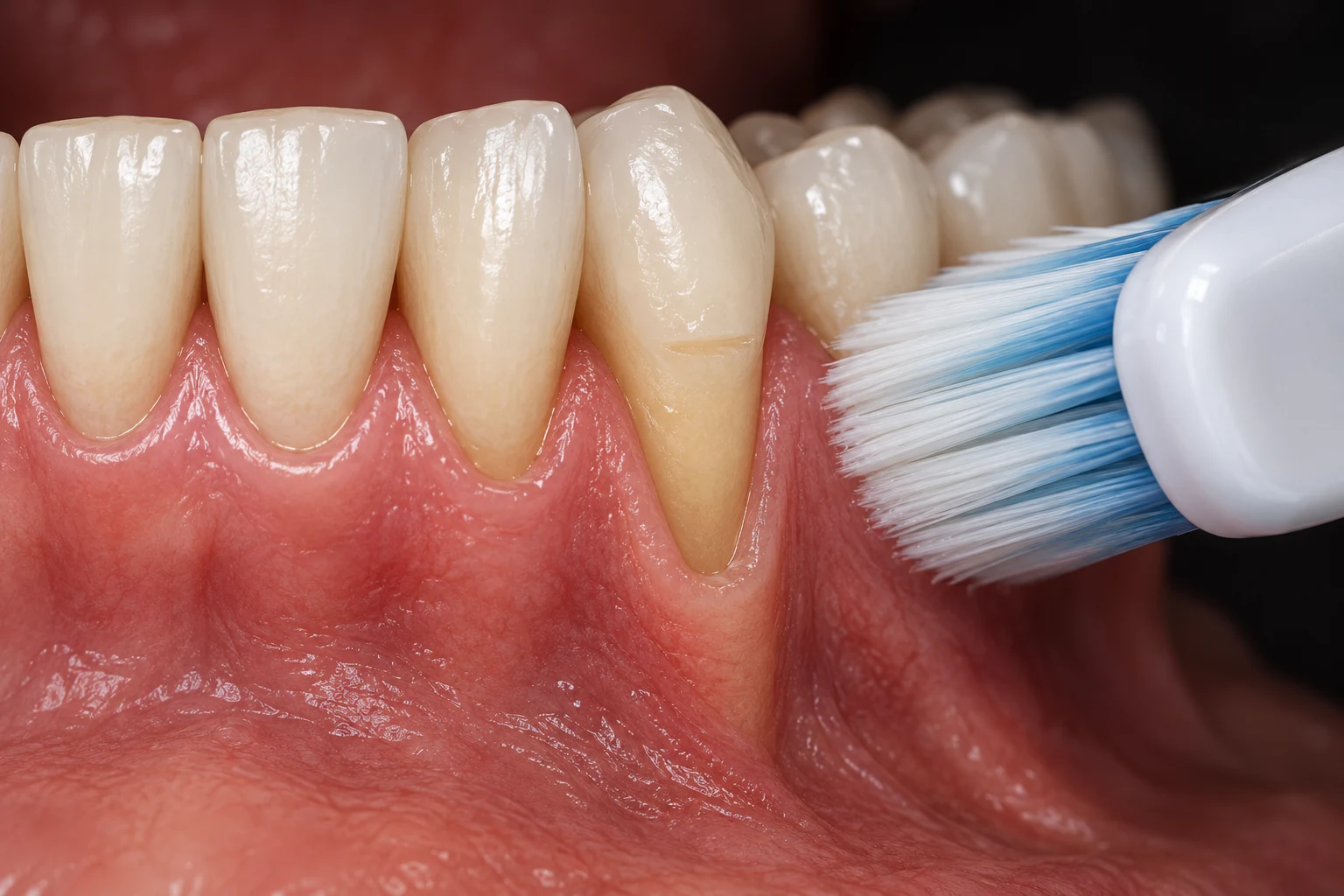
Brushing your teeth is one of the most important things you can do for your oral health. But if you use too much pressure, brushing can become unnecessarily hard on your gums.
So, can brushing too hard cause gum recession?
Yes. Aggressive brushing can contribute to gum recession in some people, particularly when the gum tissue is already thin or vulnerable. However, brushing too hard is only one possible explanation for receding gums. Periodontal disease, tooth position, anatomy, and other factors may also be involved.
If you have noticed that your gums are pulling away from one or more teeth, the goal is not to stop brushing. The goal is to understand why the tissue is changing and make sure your oral hygiene technique is protecting your teeth and gums.
What Happens When You Brush Too Hard?
Your gums are living tissue. They are designed to withstand normal daily oral hygiene, but repeated mechanical trauma can irritate the gumline.
Over time, aggressive brushing may contribute to thinning or recession of the gum tissue, particularly in areas that are already anatomically susceptible.
You might notice:
- A tooth looks longer than it used to
- More of the tooth root is visible
- Sensitivity to cold
- A notch or indentation near the gumline
- Tenderness after brushing
- Recession concentrated around certain teeth
These signs do not prove that brushing is the cause. They simply indicate that the gumline should be evaluated.
Does Brushing Too Hard Cause Gum Recession in Everyone?
No. Not everyone who brushes aggressively develops recession.
The response of the gum tissue depends on several factors, including its thickness, the position of the tooth, the type of toothbrush, brushing technique, and other oral health conditions.
For example, someone with naturally thin gum tissue may be more susceptible to recession from mechanical irritation than someone with thicker tissue.
That is why the same brushing habit can affect two people differently.
How Do You Know If You Are Brushing Too Hard?
One of the easiest clues is what your toothbrush looks like.
If the bristles become flattened, spread out, or worn relatively quickly, you may be using more pressure than necessary.
You can also pay attention to how brushing feels. Effective brushing does not need to feel harsh or abrasive. Your objective is to remove plaque from the teeth and along the gumline, not to scrub the gums.
If you are unsure about your technique, ask your dentist or dental hygienist to watch how you brush and give you specific feedback.
Brushing Too Hard vs. Not Brushing Enough
Patients sometimes worry that reducing brushing pressure means they will not clean their teeth properly.
It does not.
Plaque removal depends on technique, consistency, coverage, and time, not simply on how hard you press.
Brushing twice daily with fluoride toothpaste for approximately two minutes helps remove plaque and maintain oral health. The goal is thorough cleaning without unnecessary trauma to the gums.
Gentler brushing can still be thorough.
Can a Hard-Bristled Toothbrush Damage Your Gums?
The type of toothbrush matters, but it is not the only consideration.
A hard-bristled brush combined with excessive pressure can be particularly irritating to the gumline. Many people can clean their teeth effectively using a soft-bristled toothbrush and controlled pressure.
If you already have gum recession, your periodontist or dentist may recommend a specific toothbrush and technique based on the condition of your teeth and gums.
What Does Gum Recession From Brushing Too Hard Look Like?
Recession caused or worsened by brushing often appears as a localized change along the gumline.
The tooth may appear longer because more of its root surface is exposed. Some people notice a shallow groove near the gumline or sensitivity in that area.
The recession may affect only a few teeth rather than the entire mouth.
However, appearance alone cannot establish the cause.
For example, recession associated with periodontal disease can also produce exposed roots. A periodontal examination is necessary to distinguish among possible causes.
Why Are My Gums Receding Even Though I Brush Every Day?
Daily brushing is important, but good oral hygiene does not eliminate every risk factor for recession.
You may have recession despite brushing correctly because of:
- Naturally thin gum tissue
- Periodontal disease
- Tooth position
- Previous orthodontic movement
- Local irritation
- Tobacco use
- Certain bite-related or mechanical factors
In other words, receding gums do not automatically mean you are brushing incorrectly.
This is an important distinction because some patients respond to recession by brushing less. That can allow plaque to accumulate and potentially worsen periodontal inflammation.
The better approach is to continue cleaning your teeth while using an appropriate, gentle technique.
How Should You Brush If You Have Receding Gums?
Use Gentle Pressure
Hold the toothbrush lightly rather than gripping it tightly.
A useful way to think about brushing is that you are guiding the bristles, not scrubbing the tooth with force.
Use a Soft-bristled Toothbrush
A soft brush can remove plaque effectively when used correctly.
If you have a powered toothbrush, follow the manufacturer's instructions and avoid pressing the brush forcefully against the teeth.
Pay Attention to the Gumline
Plaque commonly collects where the teeth and gums meet.
The solution is careful cleaning along the gumline, not avoiding it.
Brush for About Two Minutes
A consistent two-minute brushing routine helps you clean all areas rather than repeatedly scrubbing the same few teeth.
Replace a Worn Toothbrush
A toothbrush with badly worn or flattened bristles may not clean efficiently and can encourage you to compensate by pressing harder.
What If I Already Have Gum Recession From Brushing Too Hard?
The first step is identifying whether brushing is actually the cause.
Your periodontist can examine the recession, assess the gum thickness, evaluate the supporting bone, and look for signs of periodontal disease or other contributing factors.
If aggressive brushing is contributing, changing your technique may help prevent further mechanical irritation.
But existing tissue loss may not simply reverse after you start brushing more gently.
That is where a periodontal evaluation becomes useful.
But existing tissue loss may not simply reverse after you start brushing more gently.
That is where a periodontal evaluation becomes useful.
Can Receding Gums From Brushing Too Hard Grow Back?
Once gum tissue has receded, it generally does not grow back on its own.
However, this does not mean every case requires surgical treatment.
If the recession is stable and does not create significant functional or health concerns, your periodontist may recommend monitoring it and addressing the factors that could cause further progression.
When root coverage is appropriate, gum grafting can add tissue to the affected area. The American Academy of Periodontology describes gum graft surgery as a procedure that can cover exposed roots and help prevent additional recession and bone loss.
When Is a Gum Graft Considered?
A gum graft may be considered when recession has resulted in an exposed root and there is a reason to increase tissue coverage or thickness.
Possible reasons include:
- Progressive recession
- Root sensitivity
- Thin or inadequate gum tissue
- Difficulty maintaining plaque control
- Concern about root exposure
- Certain cosmetic concerns related to exposed roots
The decision is individualized.
The location and depth of the recession, the amount of supporting tissue, the patient's oral hygiene, and other clinical findings all influence the treatment recommendation.
What Happens During a Gum Graft?
Gum grafting is performed with local anesthesia, so the treatment area is numb during the procedure.
Depending on the technique, the periodontist may obtain tissue from the palate or use a processed donor material. The graft is positioned over or around the area of recession and secured while it heals.
Different grafting techniques are used for different clinical situations. There is no single procedure that is right for every patient.
How Can I Prevent Gum Recession From Brushing?
You cannot prevent every type of gum recession, but you can reduce unnecessary mechanical trauma.
A few practical steps include:
- Use a soft-bristled toothbrush.
- Use light pressure.
- Brush twice daily.
- Use fluoride toothpaste.
- Clean between your teeth every day.
- Do not skip areas of recession.
- Ask your dentist or hygienist to assess your technique.
- Have persistent or progressive recession evaluated.
Good home care remains an important part of periodontal health.
Call Our Office to Schedule an Appointment
If you have noticed changes in your gumline, exposed roots, or increasing tooth sensitivity, a periodontal evaluation can help identify contributing factors and determine whether treatment is necessary.
At CharlottePerio, our board-certified periodontists evaluate the gum tissue and supporting structures to provide individualized recommendations based on your periodontal health.
Contact CharlottePerio to schedule an evaluation.
Frequently Asked Questions About Gum Recession From Brushing Too Hard
Does brushing too hard cause gum recession?
It can contribute to gum recession, particularly in areas where the gum tissue is thin or otherwise vulnerable. It is not the only possible cause.
Can brushing too hard make gums sore?
Yes. Excessive mechanical pressure can irritate the gum tissue and may contribute to tenderness.
Should I stop brushing if my gums are receding?
No. Stopping oral hygiene can allow plaque to accumulate. Instead, use a gentler technique and have the recession evaluated.
Can an electric toothbrush cause gum recession?
An electric toothbrush does not automatically cause recession. However, pressing too hard or using it incorrectly may contribute to gum irritation. Follow the manufacturer's instructions and ask your dental professional about technique if you have concerns.
Is gum recession caused by brushing permanent?
The lost gum tissue generally does not grow back on its own. However, preventing additional trauma may help stabilize the situation, and gum grafting may be considered in appropriate cases.
Can flossing cause gum recession?
Proper flossing should clean between teeth without injuring the gums. If flossing causes persistent bleeding or trauma, ask your dental professional to review your technique and assess the underlying cause.
How long does it take for gum recession to develop from brushing?
There is no universal timeline. Gum recession develops differently depending on individual anatomy, brushing habits, gum thickness, and other factors.
Can a dentist tell if brushing too hard caused my recession?
A dentist or periodontist can look for clinical findings consistent with mechanical trauma, but recession often has multiple possible causes. Your complete periodontal examination helps determine the most likely contributing factors.
When should I see a periodontist?
If recession is progressing, roots are becoming exposed, sensitivity is increasing, or you have signs of periodontal disease, a periodontal evaluation can help determine the cause and appropriate treatment.
Contact Us
We provide exceptional dental care tailored to your needs.
Contact Us at: (704) 365-0123
Fax: (704) 364-8640
Email: info@charlotteperio.com
Get in Touch
*Name
*Your Email
*Your Phone Number
Additional Information

Our Professional Affiliations






© 2026 CharlottePerio. All Rights Reserved | Notice of Privacy Practices | Digital Marketing by Remedo