



Frenectomy: What It Is and When It’s Needed
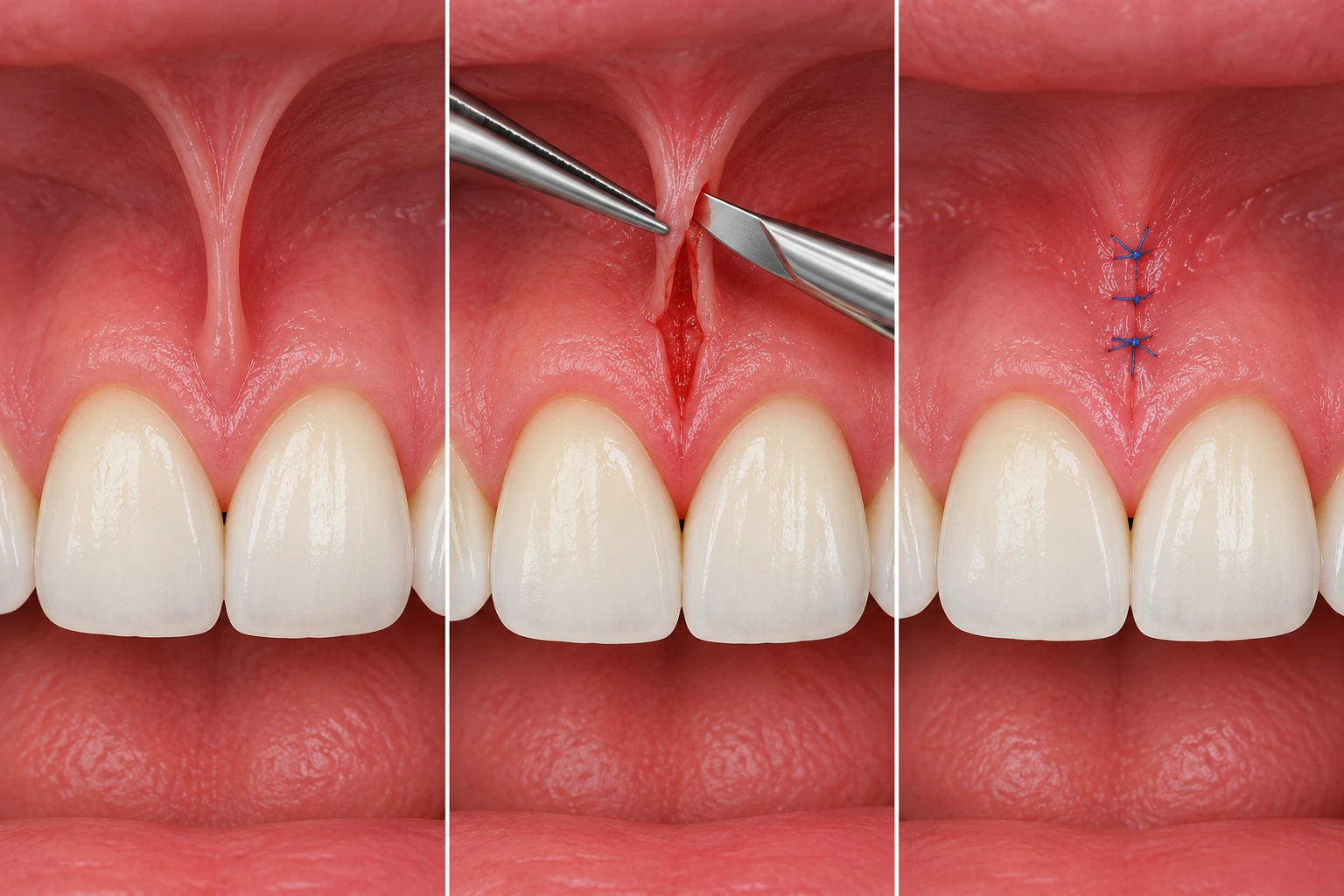
A frenectomy is a minor soft-tissue procedure that releases or removes a frenum, the small band of tissue connecting your lips, cheeks, or tongue to nearby structures. It is recommended only when the frenum restricts movement, pulls on the gums, or interferes with other dental treatment. Most people do not need one.
A small band of tissue inside your mouth helps connect your lips, cheeks, and tongue to nearby structures. This tissue, called a frenum or frenulum, is a normal part of oral anatomy. In some people, though, the position, thickness, or attachment of a frenum may restrict movement, irritate the gums, or affect the space between the front teeth.
When a frenum causes a functional or periodontal concern, a dentist or specialist may recommend a frenectomy, which removes or releases the frenum depending on the situation. Not everyone with a prominent or tight frenum needs surgery. The decision depends on symptoms, anatomy, age, and the possible effect on oral health, and a periodontist in Charlotte can help determine whether treatment is needed.
What Is a Frenectomy?
A frenectomy is a minor oral soft-tissue procedure that removes a frenum or releases its attachment. It may be recommended when the tissue interferes with normal movement, contributes to gum problems, or creates other concerns that nonsurgical measures cannot manage well.
There are several frena in the mouth, including the tissue under the tongue, the tissue connecting the upper lip to the gum, and the tissue connecting the lower lip to the gum.
What Is the Difference Between a Frenectomy and a Frenotomy?
The two terms are often used interchangeably, and some clinicians use them to mean slightly different things. When they are distinguished, a frenectomy involves removing the frenum or a portion of it along with its attachment, while a frenotomy generally means making an incision to release a restrictive frenum without removing it entirely.
Frenuloplasty is a related procedure in which the tissue is released and repositioned or reshaped when more extensive modification is needed. Which approach is used depends on the location of the frenum, the degree of restriction, and the goal of treatment.
What Are the Different Types of Frenectomy?
The location of the frenum helps explain why treatment may be considered.
1. Lingual Frenectomy
The lingual frenum is the band of tissue beneath the tongue that connects it to the floor of the mouth. When it restricts tongue movement, the condition is commonly called tongue-tie, or ankyloglossia. A lingual frenectomy may be considered when restricted movement causes meaningful functional difficulties. The need for treatment depends on symptoms, mobility, and the overall clinical assessment.
In infants, tongue-tie may be evaluated when breastfeeding is difficult. Feeding problems have several possible causes, so a qualified healthcare professional should assess feeding and consider nonsurgical support before recommending a procedure. In older children and adults, decisions should rest on documented functional limits rather than on how the frenum looks. A visible or short lingual frenum does not automatically require surgery.
2. Labial Frenectomy
The labial frenum connects the inside of the lip to the gum near the front teeth. Both upper and lower labial frena are normal. A labial frenectomy may be considered when an unusually prominent or tightly attached frenum causes a specific concern, such as tension on the gum tissue or a persistent gap between the upper front teeth.
Timing matters. In children, a gap between the permanent upper front teeth can change as the teeth and jaws develop. If orthodontic treatment is planned, the dentist or periodontist may coordinate the timing of a frenectomy with the orthodontic plan.
3. Buccal Frenectomy
Buccal frena connect the cheeks to the gum tissue. They are usually normal and do not need treatment. In selected cases a buccal frenum creates tension on nearby gum tissue or complicates a particular periodontal concern, and treatment is considered only when the findings support it.
When Is a Frenectomy Needed?
A frenectomy may be recommended when the frenum contributes to a functional problem or affects the health of surrounding tissue. A visible frenum alone is not enough to decide that surgery is necessary.
Restricted Tongue Movement
A restrictive lingual frenum may limit how far the tongue can extend, lift, or move side to side. When this affects important functions, an evaluation can determine whether a frenectomy or another approach is appropriate. The assessment focuses on function, not on the appearance of the tissue under the tongue. For infants with feeding difficulty, a qualified healthcare professional should first assess feeding and consider other causes.
Gum Recession or Tension on the Gumline
A tightly attached labial frenum can pull on the gum tissue near the front teeth whenever the lip moves. In selected cases, this tension may contribute to local irritation or gum recession. A periodontal exam can determine whether the frenum is clinically significant and whether releasing it belongs in your treatment plan.
A frenectomy does not automatically reverse recession that is already present. If gum tissue has been lost, soft tissue grafting may need to be considered, and in some cases a frenum release is planned alongside it so the graft can heal without ongoing pull on the tissue.
A Gap Between the Front Teeth
A prominent upper labial frenum may be associated with a gap between the upper front teeth, known as a diastema. Gaps also develop because of tooth size, tooth position, jaw development, and other factors, so a gap alone does not mean surgery is needed. In children and adolescents, timing is especially important because the teeth and jaws are still developing. A dentist, periodontist, or orthodontist can assess the gap and decide whether monitoring, orthodontic treatment, a frenectomy, or a coordinated approach is best.
Removing the frenum does not necessarily close the gap or keep it closed. If orthodontic treatment is needed, the timing of any frenectomy should be set as part of the overall plan.
Difficulty With Oral Hygiene or Local Irritation
Sometimes the position of a frenum makes one area hard to clean or leads to repeated irritation. Before recommending surgery, your periodontist determines whether the concern is directly related to the frenum and whether better home care or other nonsurgical measures would be enough.
Do Adults Need a Frenectomy?
Many adults have a prominent frenum and never need treatment. A frenectomy in an adult is usually considered for a specific reason: the frenum limits tongue or lip movement, pulls the gum away from the teeth, contributes to recession, or interferes with restorative, orthodontic, or periodontal treatment. Adult healing can take a little more care than in a young child, and your periodontist will explain what to expect for your situation.
How Is a Frenectomy Performed?
The procedure varies with the location of the frenum, the patient’s age, and the reason for treatment.
Step 1: Examination and Treatment Planning
Your periodontist examines the frenum and nearby tissues, as in any first periodontal visit. For a lingual frenum, the evaluation may include tongue movement and related functional concerns. For a labial frenum, it may include the attachment, the gumline, tooth spacing, and any tension created when the lip moves. You will hear whether treatment is appropriate, along with the expected benefits, limits, and alternatives.
Step 2: Numbing the Treatment Area
Local anesthesia is commonly used to numb the area and minimize discomfort. The specific approach depends on age, medical history, and treatment needs. If anxiety about oral surgery is a concern, ask about our conscious sedation options. For infants and young children, the clinician chooses the method based on the circumstances and applicable clinical guidance.
Step 3: Releasing or Removing the Tissue
The frenum is released or removed with an appropriate technique. Depending on the case, this may involve a scalpel, electrosurgery, or a dental laser. Not every technique suits every patient, and your periodontist chooses based on your anatomy and the procedure required. Sutures may be needed, depending on the technique and the extent of the treatment.
Step 4: Aftercare and Follow-Up
After a lingual frenectomy, tongue exercises or functional therapy may be recommended, depending on the patient, the procedure, and the treating professional’s assessment. They are not automatically required for everyone. If exercises are recommended, follow the instructions you are given, and do not begin an exercise program or manipulate the healing tissue without guidance.
What Is Recovery Like After a Frenectomy?
Recovery varies with the location of the frenum, the technique, and your healing. Some patients have mild soreness, swelling, or tenderness for a period afterward. Your periodontist will explain what to expect and how to care for the area, following guidance similar to our postoperative instructions. During early healing you may be advised to:
- Choose foods that are comfortable to eat.
- Follow the recommended oral hygiene instructions.
- Avoid irritating or disturbing the surgical site.
- Take any recommended medications as directed.
- Attend follow-up visits when advised.
For a lingual frenectomy, any additional movement or functional therapy will be individualized. Contact the office if you have persistent bleeding, increasing pain, worsening swelling, or other symptoms that concern you.
Are There Risks Associated With a Frenectomy?
A frenectomy is generally a relatively minor soft-tissue procedure, but it still carries potential risks. These may include bleeding, swelling, infection, discomfort, scarring, or reattachment of the tissue. Risks vary with the procedure and the patient, and additional considerations apply to the lingual frenum because of nearby anatomy. Before you proceed, ask about the risks that apply to your case and whether alternatives exist.
Frenectomy vs. Other Treatment Options
A frenectomy is not always the first or only option for a frenum-related concern.
Monitoring Without Surgery
If a frenum is not causing symptoms, restricting movement, or affecting gum health, monitoring may be appropriate. Many people have a prominent frenum and never need treatment.
Orthodontic Treatment
When the main concern is a gap between the teeth, orthodontic treatment may be needed to move the teeth. A frenectomy may be added to the overall plan if the frenum is contributing to the problem.
Periodontal Treatment
If gum recession or inflammation is present, the plan may need to address the periodontal condition as well as any tension from the frenum. A frenectomy alone does not replace treatment for gum disease or restore tissue that is already lost. Our overview of common periodontal procedures explains how these treatments fit together.
Choosing a Periodontist for a Frenectomy Evaluation in Charlotte, NC
A frenectomy should rest on a clear clinical reason. Your periodontist explains how the frenum is affecting oral function, gum health, or dental treatment, and whether surgery is likely to help. A periodontist may be involved when the frenum affects the gumline, contributes to localized recession, or needs to be considered alongside other periodontal procedures.
CharlottePerio has served the Charlotte community for more than 50 years. Our board-certified periodontists evaluate the surrounding gum tissue and supporting structures to help determine whether treatment may be appropriate. When a concern involves tongue function, infant feeding, or orthodontic planning, we coordinate with the relevant dental or healthcare professional.
Understanding Whether a Frenectomy Is Right for You
A frenum is a normal part of oral anatomy, and most people do not need theirs removed. When the tissue restricts movement, contributes to gum tension, or interferes with a broader dental plan, a frenectomy may be worth considering. A periodontal evaluation looks at the frenum, the surrounding gum tissue, and the supporting structures so you understand the cause of your concern and can make an informed decision.
Have a question about a frenum? Call CharlottePerio at (704) 365-0123 or schedule a consultation to talk with one of our periodontists.
Frequently Asked Questions on Frenectomy
Is a Frenectomy Always Necessary for a Tongue-Tie?
No. A restrictive lingual frenum does not automatically require surgery. Treatment depends on whether tongue movement is meaningfully restricted and whether that causes functional difficulty. An evaluation helps decide whether a procedure may help.
Can a Frenectomy Close a Gap Between the Front Teeth?
It may be recommended when the upper labial frenum contributes to a gap, but removing the tissue does not necessarily close the space. Orthodontic treatment may be needed, and the timing of surgery should fit the overall plan.
Is a Frenectomy Painful?
Local anesthesia is commonly used to numb the area and minimize discomfort. Some soreness or swelling may follow, and recovery varies by patient and technique.
Can a Frenectomy Be Performed With a Laser?
A laser is one method used for selected frenectomies in dentistry. A scalpel or electrosurgery may also be appropriate. The technique used depends on the clinical situation and your periodontist’s assessment.
Can a Frenectomy Help With Gum Recession?
In selected cases, releasing a frenum that places excess tension on the gum may be part of managing a periodontal concern. It does not automatically restore lost gum tissue, and additional treatment may be needed if recession is already present.
At What Age Can Someone Have a Frenectomy?
A frenectomy can be considered at different ages when there is a clear clinical reason. For children, the decision depends on the concern, development, and functional needs. For adults, it is based on anatomy, symptoms, and treatment goals.
Does the Tissue Grow Back After a Frenectomy?
The area heals, and some scar formation is part of normal healing. In some cases the tissue can reattach or the restriction can persist, which is why follow-up matters. The likelihood varies with the procedure and your healing.
Does Insurance Cover a Frenectomy?
Coverage varies by plan and by the reason for the procedure. Our team can review costs and insurance with you before treatment.
Contact Us
We provide exceptional dental care tailored to your needs.
Contact Us at: (704) 365-0123
Fax: (704) 364-8640
Email: info@charlotteperio.com
Get in Touch
*Name
*Your Email
*Your Phone Number
Additional Information

Our Professional Affiliations









© 2026 CharlottePerio. All Rights Reserved | Notice of Privacy Practices | Digital Marketing by Remedo