


Implant Supported Dentures in Charlotte, NC
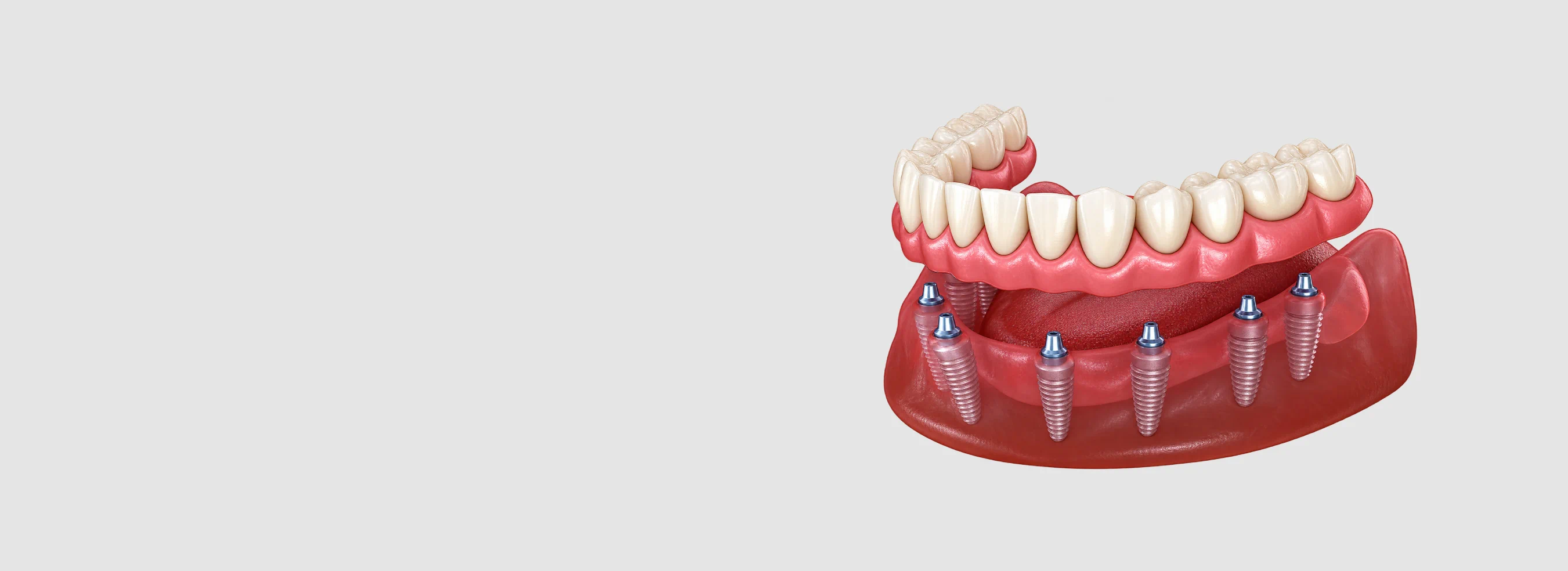
Traditional dentures rely on the gums for support and often require adhesives to improve retention. As the jawbone continues to shrink over time, dentures may become progressively looser and require adjustments or replacement. For patients seeking greater stability and comfort, implant-supported dentures offer a secure alternative that is anchored directly to dental implants.
What Are Implant-Supported Dentures?
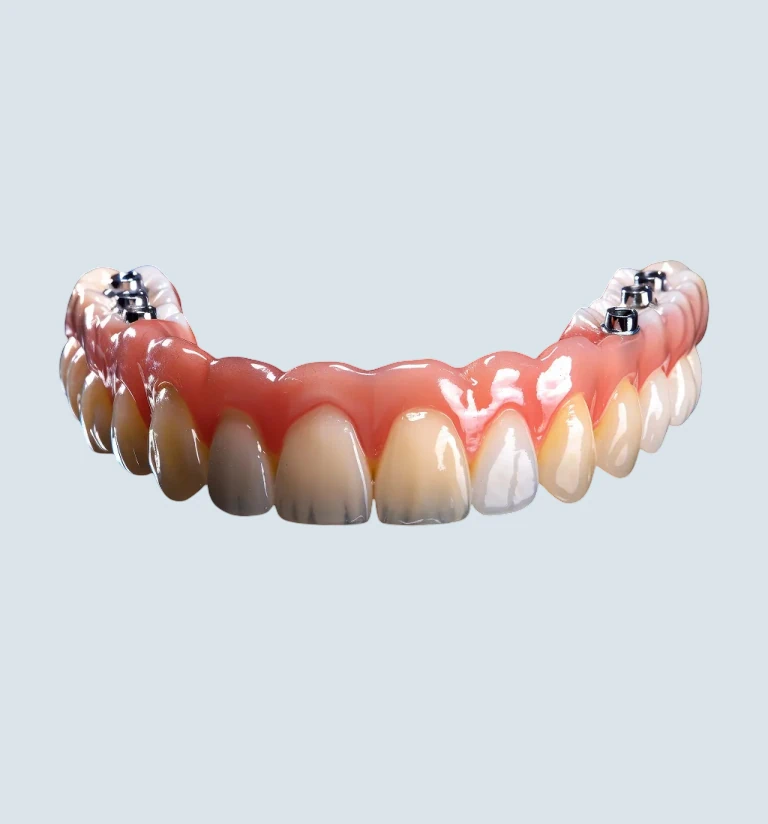
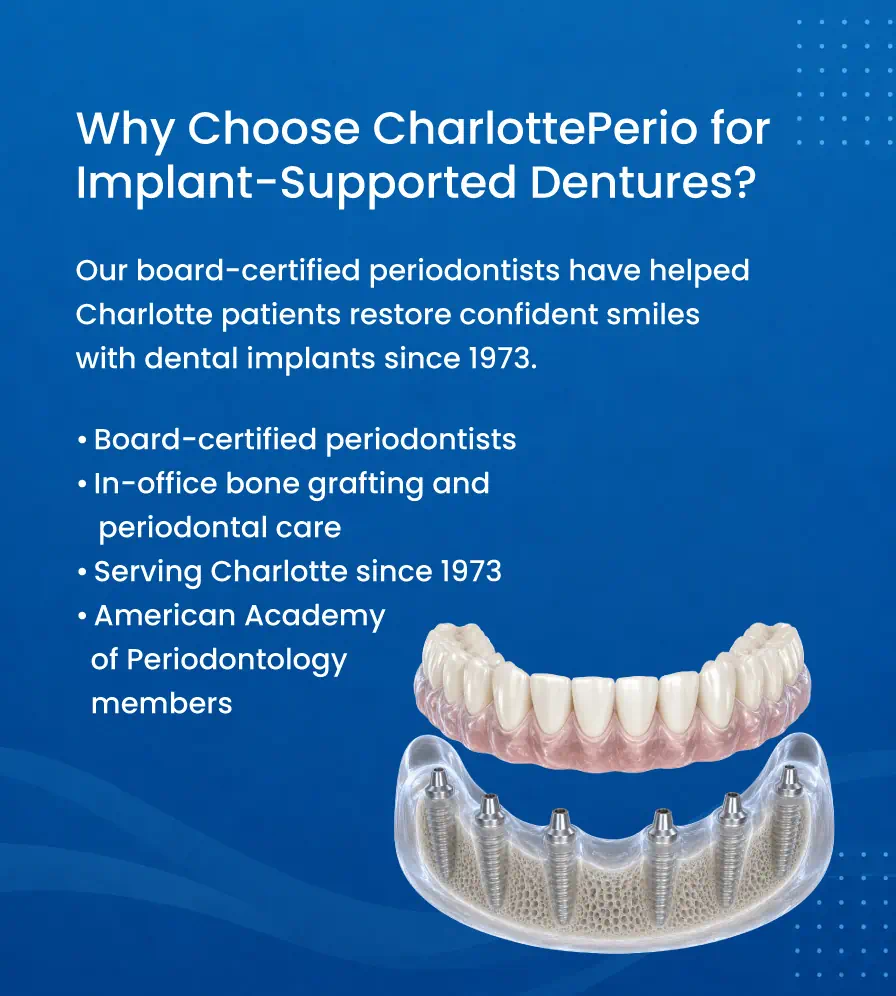
Implant-supported dentures, sometimes called snap-on teeth, overdentures, or implant-retained dentures, are prosthetic arches that attach to dental implants placed in the jawbone. Rather than resting on the gums and relying on suction or adhesive, the denture clips or screws directly onto implant posts.
The implants act as artificial roots. They anchor into the bone and stay there. The denture connects to them.
This makes implant-supported dentures significantly more stable than conventional dentures and because the implants stimulate the jawbone, they help prevent the bone loss that causes traditional dentures to loosen over time.
Types of Implant-Supported Dentures
Snap-On Overdentures (Implant-Retained Dentures)
Snap-on dentures attach to two or more implants using special connectors. They can be removed by the patient for cleaning. The snapping mechanism keeps the denture stable during eating and speaking without adhesive, but gives you the ability to take it out.
This is the most accessible implant denture option, typically requiring fewer implants and costing less than fixed solutions.
Best for: Patients transitioning from traditional removable dentures who want significantly improved stability without the commitment of a fully fixed solution.
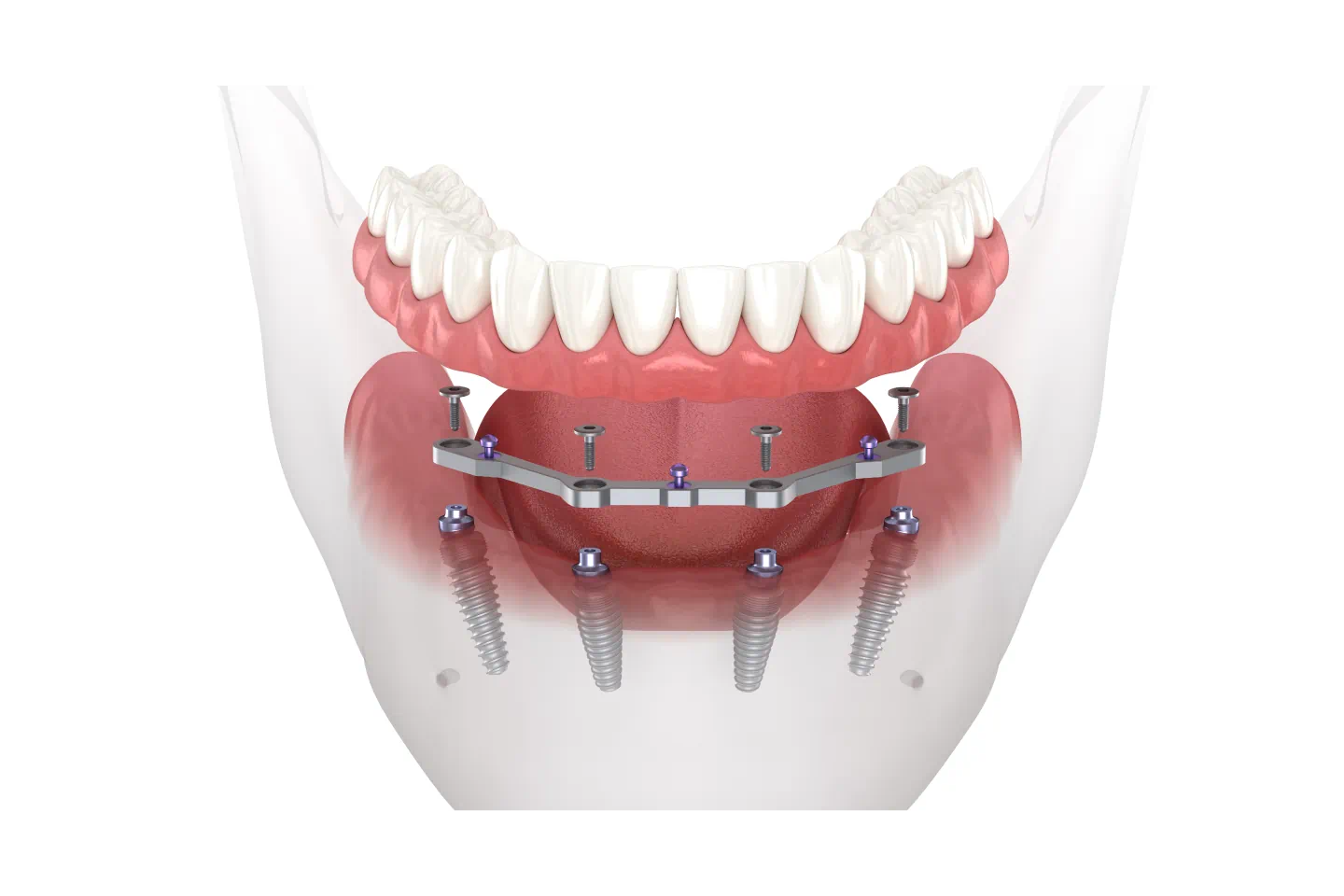
Bar-Supported Dentures
A thin metal bar runs along the gumline, connecting three or more implants. The denture attaches to this bar with clips or clasps. Bar-supported dentures provide better retention than snap-on designs and distribute biting forces more evenly across the implants.
Best for: Patients who want a high level of stability and have adequate bone to support three or more implants.
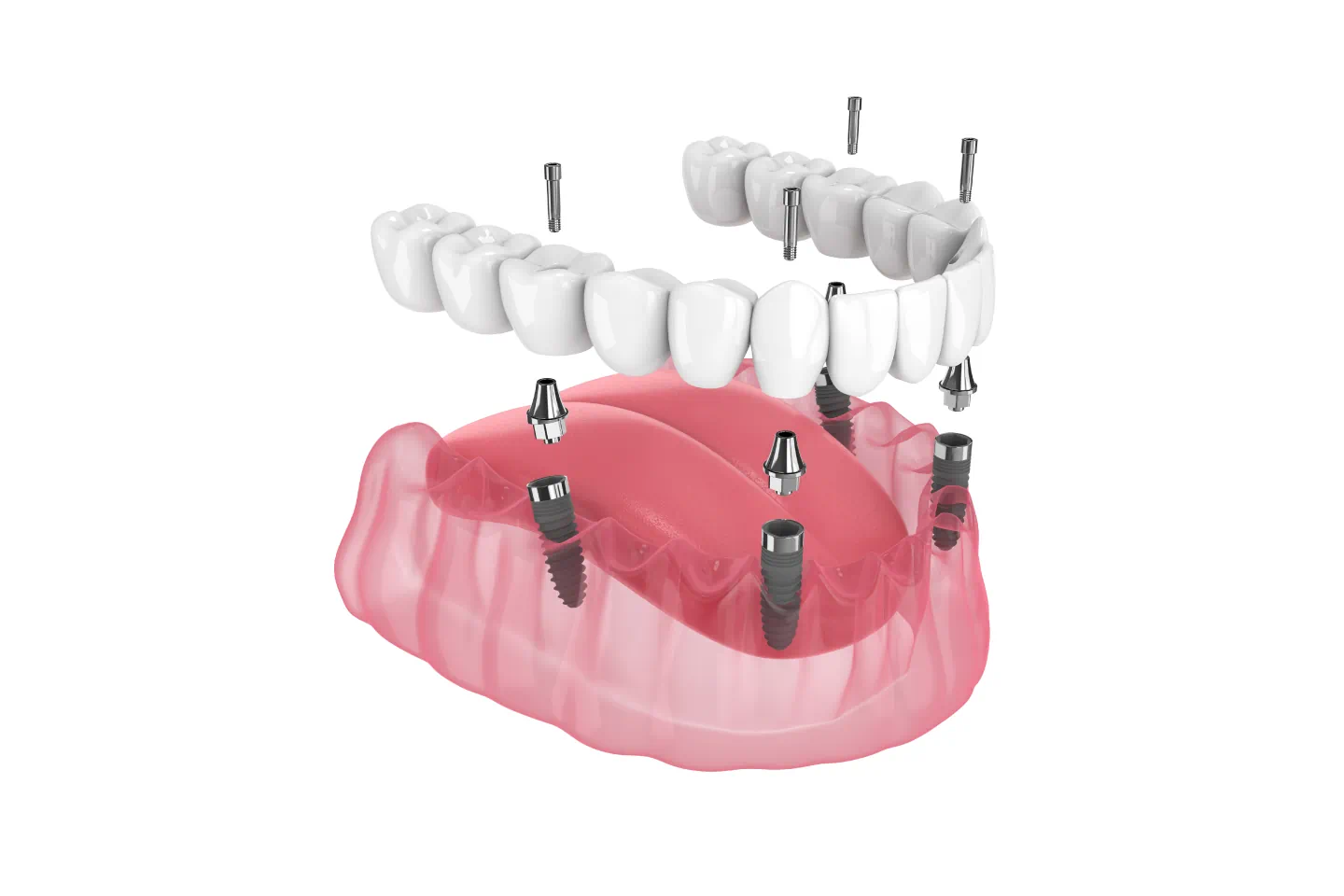
Fixed Implant-Supported Dentures (Implant-Fixed)
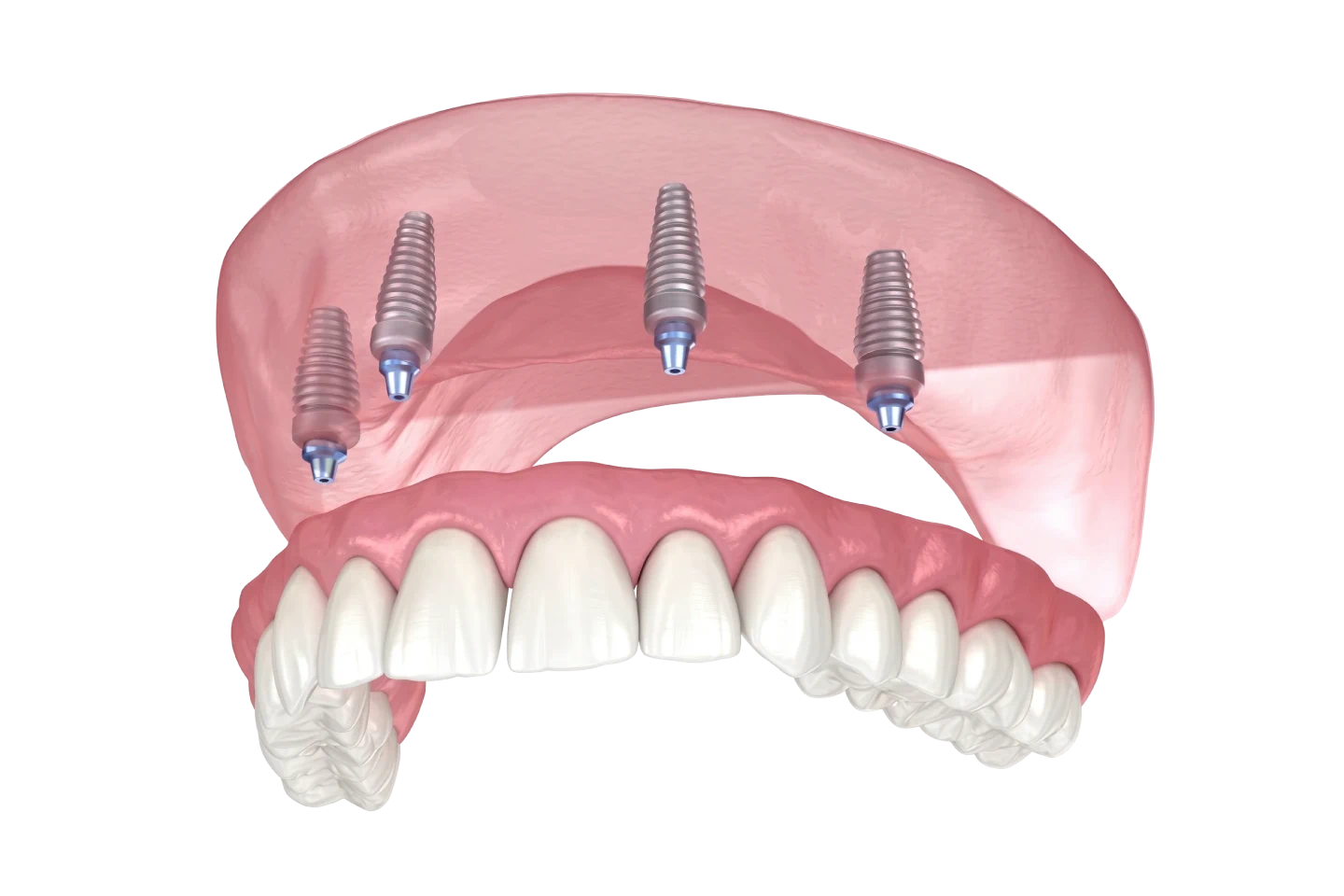
Fixed implant dentures are permanently attached to four or more implants and can only be removed by a dentist. Patients care for them like natural teeth, brushing, flossing around the implants, and attending regular cleanings. This is the closest experience to having natural teeth.
Best for: Patients who want the most stable, natural-feeling result and are good candidates for four or more implants.
Implant-Supported Dentures vs. Traditional Dentures
| Feature | Implant-Supported Dentures | Traditional Removable Dentures |
|---|---|---|
| Stays secure while eating | Yes | Often shifts |
| Requires adhesive | No | Usually |
| Preserves jawbone | Yes | No |
| Improves over time | Yes (stable foundation) | No (loosens as bone changes) |
| Natural feel | Much closer to natural teeth | Less natural feel |
| Removable for cleaning | Depends on the type (fixed or removable) | Yes |
One of the most significant advantages of implant-supported dentures is their ability to help preserve the jawbone. Traditional dentures rest on the gums and do not provide the stimulation needed to maintain bone volume. As the jawbone gradually shrinks over time, dentures can become loose, uncomfortable, and less stable, often leading to sore spots and changes in facial appearance. Dental implants help stimulate the bone and slow this process, supporting a more secure fit and helping maintain the natural contours of the face.
Am I a Candidate for Implant-Supported Dentures?
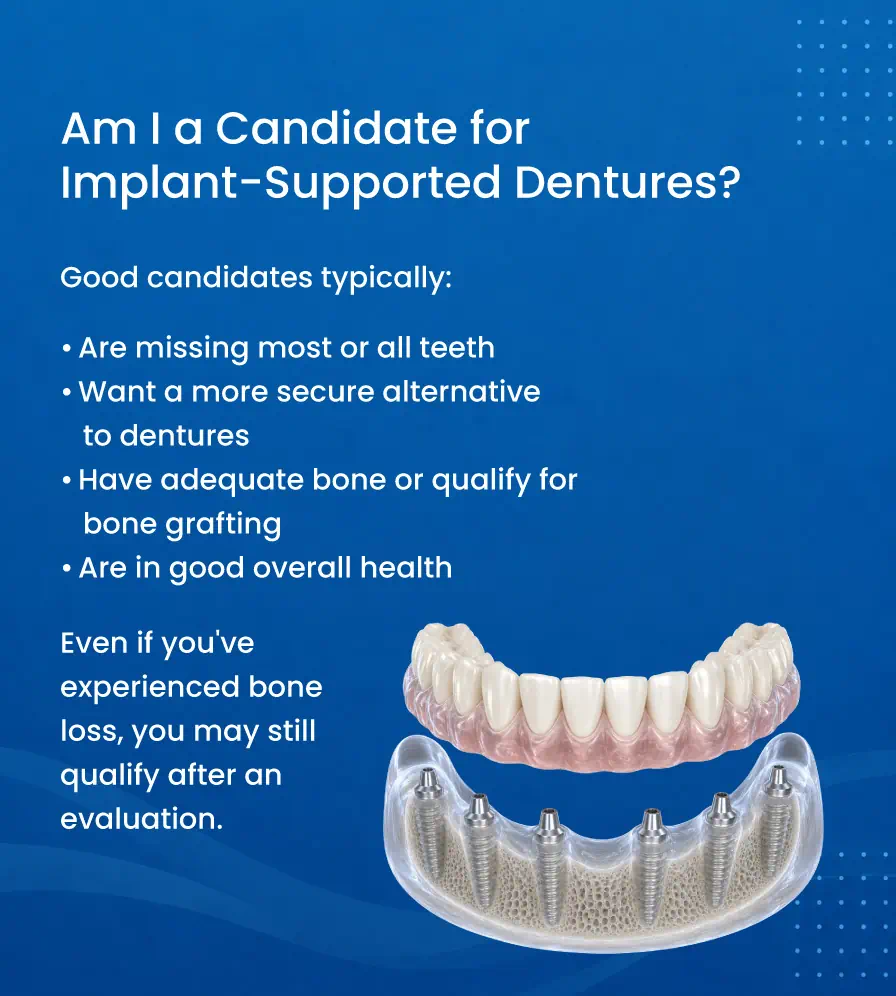
Good candidates for implant-supported dentures typically:
- Are missing most or all teeth in one or both arches
- Currently wear removable dentures (full or partial) and want a more stable solution
- Have adequate bone to support implant placement, or are willing to consider bone grafting
- Are in good general health with no uncontrolled conditions that would impair healing
Patients who smoke or have conditions like uncontrolled diabetes may still be candidates, though implant success rates can be affected. We evaluate every patient individually and discuss all relevant factors at the consultation.
Even patients who have worn dentures for years and have experienced significant bone loss may qualify for snap-on overdentures, which require fewer implants and less bone than fixed solutions. We'll let you know during your consultation what's possible.
What are implant-supported dentures?

How many implants do I need for implant-supported dentures?
Are implant-supported dentures removable?
What is the difference between snap-on dentures and fixed implant dentures?
Can I get implant-supported dentures if I've worn regular dentures for years?
Do implant-supported dentures prevent bone loss?
How do I care for implant-supported dentures?

Our Professional Affiliations

Contact Us
We provide exceptional dental care tailored to your needs.
Contact Us at: (704) 365-0123
Fax: (704) 364-8640
Email: info@charlotteperio.com
Get in Touch
*Name
*Your Email
*Your Phone Number
Additional Information


© 2026 CharlottePerio. All Rights Reserved | Notice of Privacy Practices | Digital Marketing by Remedo