



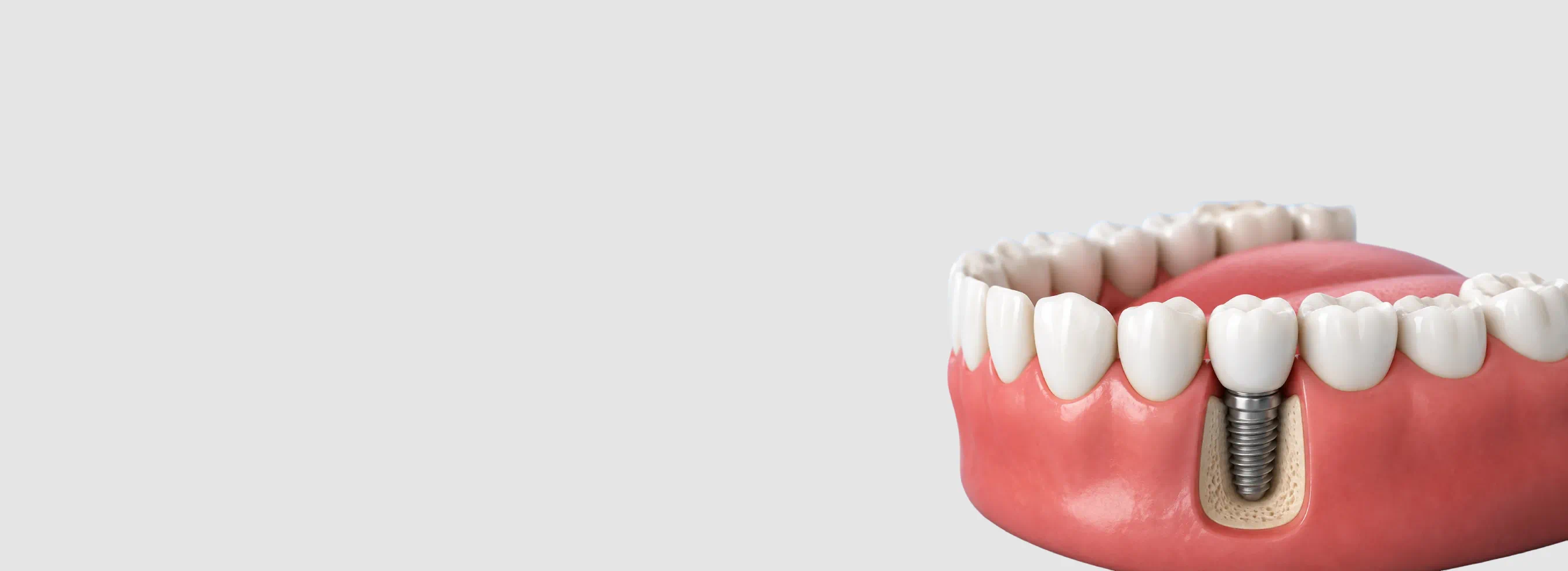
A single dental implant is the most complete way to replace a missing tooth because it's the only treatment that replaces both the missing tooth root and the visible crown. The implant is placed in the jawbone, where it functions like a natural tooth root, providing a stable foundation for a custom-made crown that looks, feels, and functions like a natural tooth.
At CharlottePerio, our board-certified periodontists use advanced technology and personalized treatment planning to help patients restore their smiles with long-lasting, natural-looking dental implants.
What Is a Single Tooth Implant?
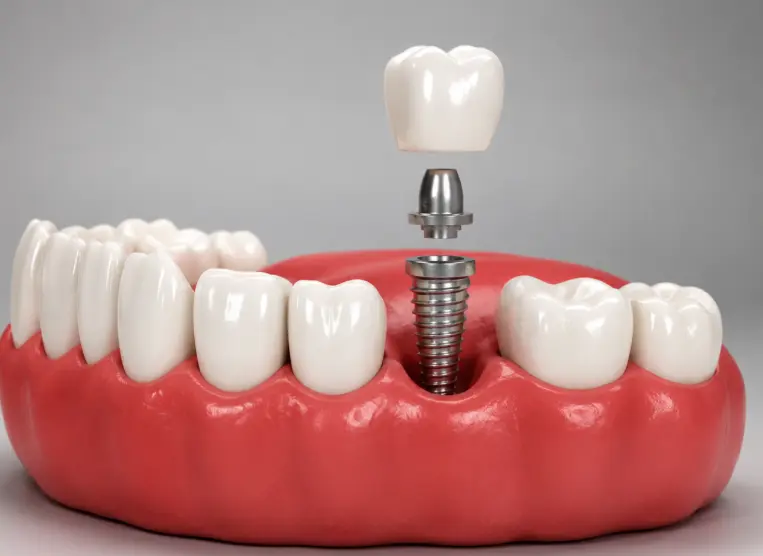
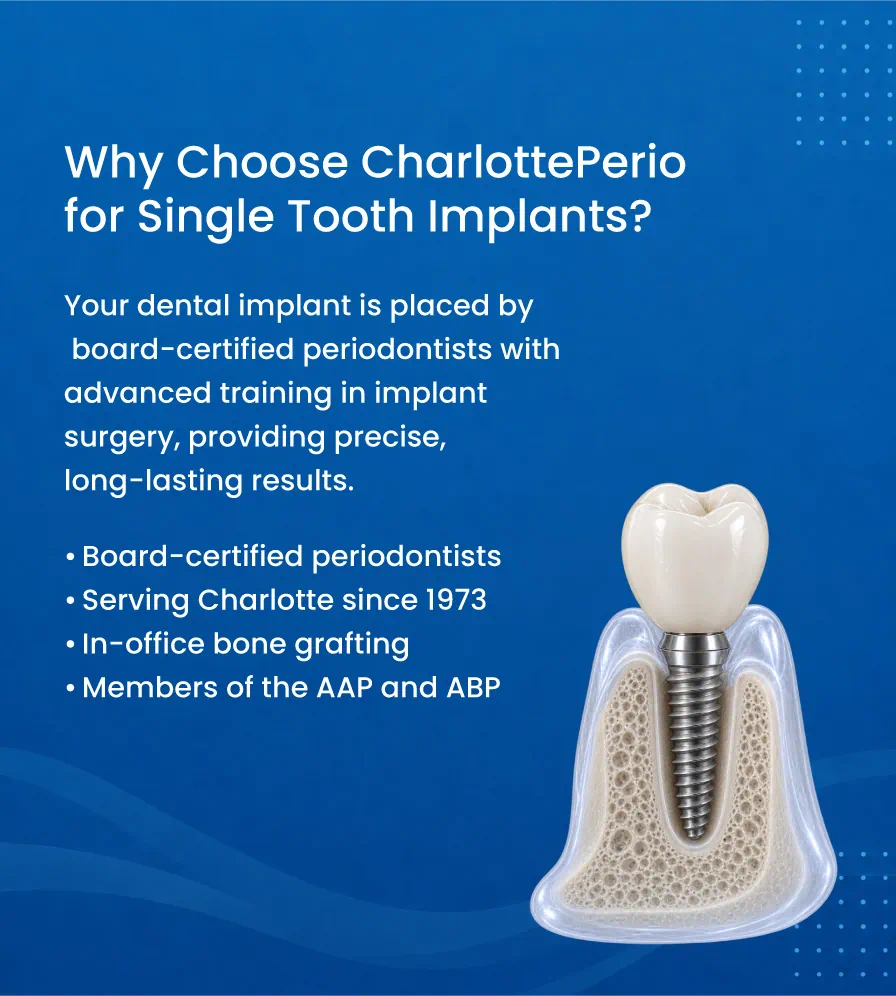
A single tooth dental implant consists of three components:
- The implant post: a small titanium screw placed directly into the jawbone where the missing tooth's root once was
- The abutment: a connector piece that attaches to the top of the post once healing is complete
- The crown: a custom-made prosthetic tooth that attaches to the abutment and matches the shape and shade of your surrounding teeth
Once complete, a single tooth implant looks, feels, and functions like a natural tooth. Most patients find it indistinguishable from their surrounding teeth.
Single Tooth Implant vs. a Dental Bridge
For decades, the standard way to replace one missing tooth was a fixed bridge; crowning the two teeth on either side of the gap and suspending a false tooth between them. A bridge is still a valid option for some patients, but it has limitations compared to an implant.
| Feature | Single Tooth Implant | Fixed Dental Bridge |
|---|---|---|
| Preserves adjacent teeth | Yes | No (requires crowning adjacent teeth) |
| Preserves jawbone at the missing tooth site | Yes | No |
| Feels and functions like a natural tooth | Yes | Partially |
| Average lifespan | 20–30+ years | 7–10 years |
| Requires ongoing maintenance or replacement | Routine oral hygiene only | Yes (may require replacement over time) |
The most important distinction is that a bridge requires permanently altering two healthy teeth to support the restoration. An implant stands entirely on its own. The adjacent teeth are left completely untouched.
Why the Root Matters
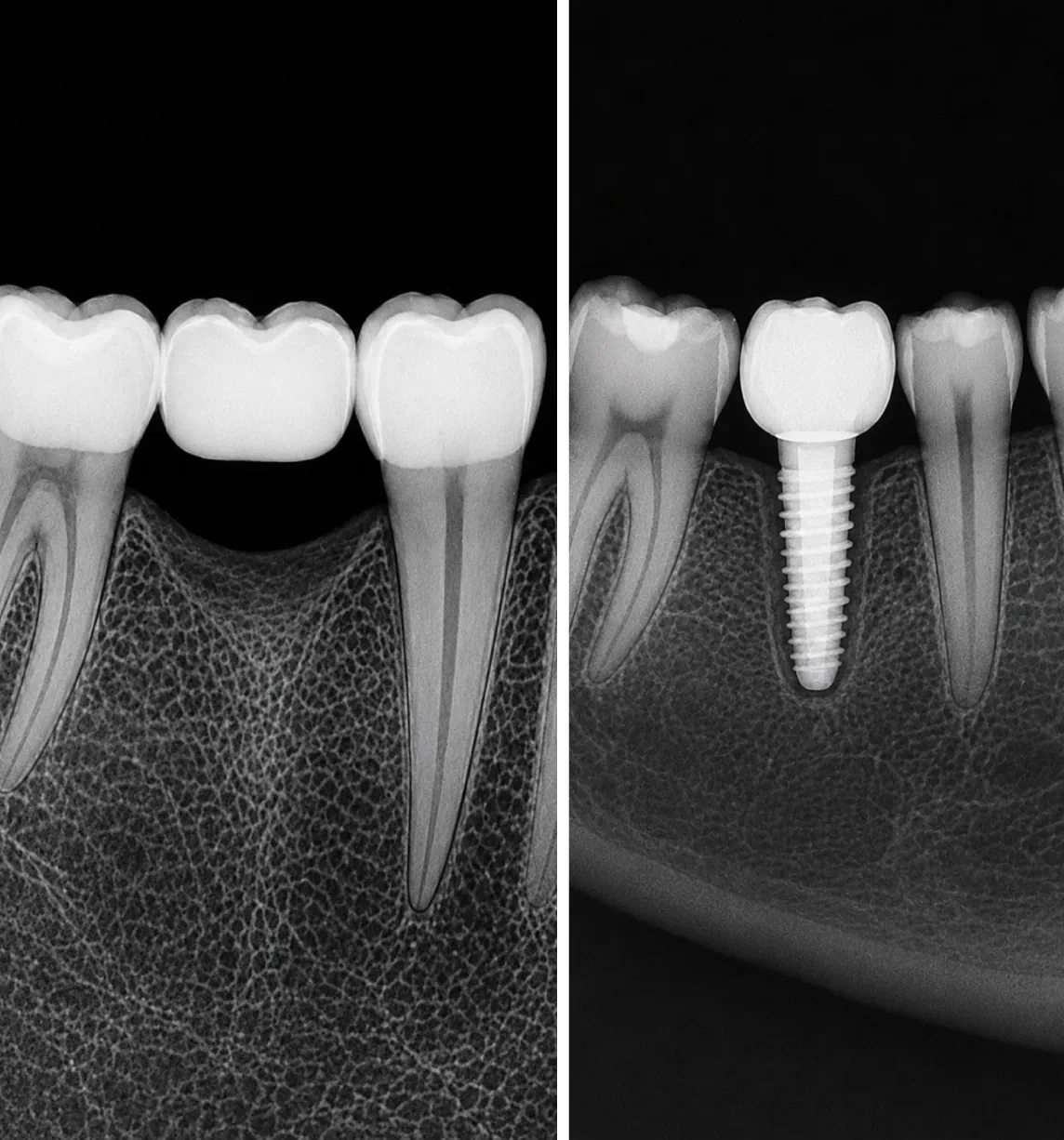
Most tooth replacement options replace only the visible portion of the tooth, the crown. What they leave out is the root.
The root does more than anchor the tooth. It stimulates the jawbone every time you bite and chew. This stimulation signals the body to maintain the bone in that area.
When a tooth root is removed and not replaced, the bone beneath the gap begins to resorb. Within the first year, bone volume at a tooth extraction site can decrease noticeably. Over years, this bone loss affects the shape of the jaw and the alignment of neighboring teeth.
A dental implant is the only tooth replacement that functions as a root. It anchors in the bone and provides the stimulation needed to preserve bone volume at the extraction site.
Who Is a Good Candidate for a Single Tooth Implant?
Most patients who are missing one tooth are potential candidates for a single implant. The key factors are:
- Adequate bone at the site; enough height and width to support a titanium post
- Healthy gum tissue around the replacement site
- Good general health, with no conditions that impair healing
- No active gum disease (if present, it needs to be treated before implant placement)
Patients who smoke have a higher risk of implant complications and should discuss this with their periodontist. Patients with certain medical conditions, such as uncontrolled diabetes, may need additional evaluation. We assess all of these factors at your consultation.
If bone loss has already occurred at the extraction site, bone grafting may be recommended to build adequate volume before the implant is placed. This adds time to the process but gives the implant the foundation it needs for long-term success.
How Long Does a Single Tooth Implant Take?
The process from start to finish typically takes 3 to 6 months, depending on:
- Whether a tooth needs to be extracted first
- Whether bone grafting is needed and how long healing takes
- How quickly the implant integrates with the bone
Timeline Overview
Step 1: Consultation and treatment planning (1 appointment)
Step 2: Extraction (if needed) and possible bone grafting or socket preservation
Step 3: Implant placement (surgical appointment)
Step 4: Healing and osseointegration (3 to 6 months)
Step 5: Crown placement by your restorative dentist
CharlottePerio provides Steps 1 through 4 of your implant treatment, the surgical phase of care. Once your implant has fully healed, your general dentist or prosthodontist will create and place your custom dental crown, completing your new smile.
Single Tooth Implant Aftercare
Caring for a dental implant is very similar to caring for a natural tooth. With good oral hygiene and regular professional care, dental implants can provide a long-lasting solution for missing teeth.
To help keep your implant healthy:
- Brush twice a day, paying special attention to the gumline around the implant.
- Floss daily using traditional floss, implant-specific floss, or interdental brushes as recommended by your dental professional.
- Schedule regular dental cleanings and exams to monitor the health of your implant and surrounding gums.
- Avoid chewing on hard objects, such as ice, hard candy, etc., which can damage the implant crown.
With proper care and regular professional maintenance, a single tooth implant can provide decades of reliable function. Although the custom crown may need to be replaced due to normal wear, the titanium implant post is designed to last a lifetime in many patients.
Frequently Asked Questions
How long does a single tooth implant last?

Is a single tooth implant painful?
Can I get a dental implant right after a tooth extraction?
What is the difference between a dental implant and a dental bridge?
Do I need a specialist to place a single tooth implant?
What if I don't replace my missing tooth?
How do I clean around a dental implant?

Our Professional Affiliations







Contact Us
We provide exceptional dental care tailored to your needs.
Contact Us at: (704) 365-0123
Fax: (704) 364-8640
Email: info@charlotteperio.com
Get in Touch
*Name
*Your Email
*Your Phone Number
Additional Information


© 2026 CharlottePerio. All Rights Reserved | Notice of Privacy Practices | Digital Marketing by Remedo