


Smoking and Dental Implants: What Quitting (or Not) Means for Your Success Rate
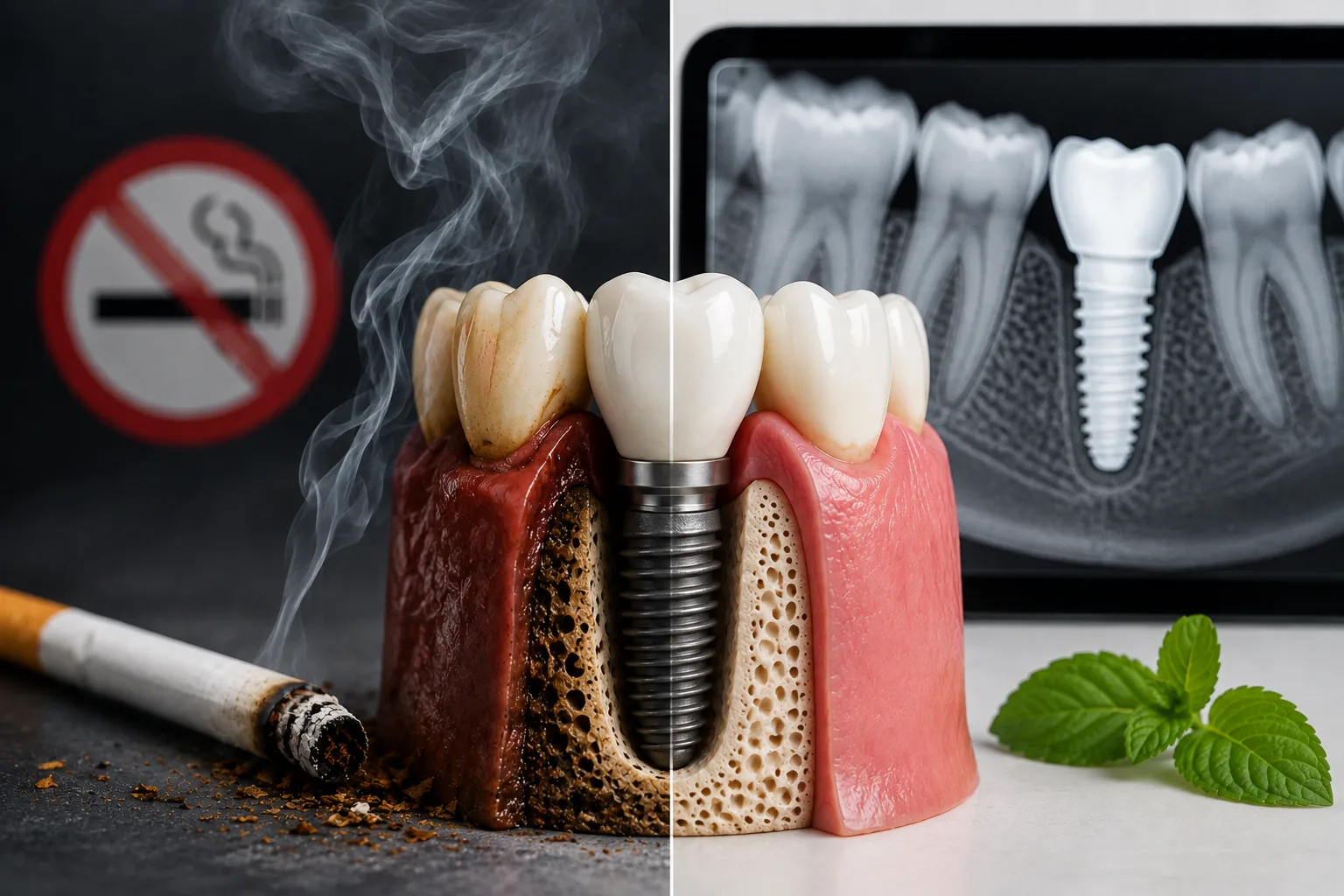
Smoking does not automatically prevent someone from receiving dental implants. However, tobacco use is an important risk factor because it can interfere with healing and increase the likelihood of complications following implant surgery.
The effect of smoking on dental implant treatment varies from patient to patient. The amount and duration of tobacco use, overall health, gum and bone health, oral hygiene, and the ability to heal after surgery can all influence treatment outcomes.
For patients who smoke, understanding these risks before implant surgery allows the periodontist and restorative dentist to develop a treatment plan that supports healing and long-term implant health.
Key Takeaways: Smoking and Dental Implants
- Smoking is associated with a higher risk of dental implant complications and failure compared with not smoking.
- Nicotine can restrict blood flow, which may interfere with the tissue and bone healing needed after implant surgery.
- Avoiding tobacco before and after implant placement can help create a healthier environment for healing.
- Smoking does not automatically disqualify someone from receiving dental implants.
- Vaping should not be considered a risk-free alternative during implant healing, particularly when nicotine is involved.
- Implant candidacy should always be evaluated individually based on the patient's complete health history and clinical findings.
Why Does Smoking Affect Dental Implants?
Successful dental implant treatment depends on the body's ability to heal following surgery. Tobacco use can interfere with several aspects of this process.
Nicotine causes blood vessels to narrow, which can reduce blood flow to the gums and surrounding tissues. Smoking may also affect oxygen delivery, immune response, inflammation, and the body's ability to repair tissue.
These effects are particularly important during the period when the dental implant is integrating with the jawbone.
What Is Osseointegration?
Osseointegration is the biological process through which bone forms a direct connection with the surface of a dental implant. This process helps create the stable foundation needed to support the final dental restoration.
Smoking may interfere with osseointegration by:
- Reducing blood flow to the surgical area
- Limiting oxygen and nutrients available to healing tissues
- Affecting immune response
- Delaying soft-tissue and bone healing
- Increasing the risk of inflammation around the implant
Because healing plays such an important role in implant success, tobacco use is an important consideration when planning treatment.
How Much Does Smoking Increase Dental Implant Failure Risk?
Research consistently identifies smoking as a risk factor for dental implant complications and failure. Studies have also found an association between smoking and peri-implant disease, including peri-implantitis.
Peri-implantitis is an inflammatory condition involving the tissues around a dental implant. When it progresses, it can contribute to loss of the supporting bone and, in some cases, loss of the implant.
The level of risk is not identical for every patient. Smoking frequency and duration, oral hygiene, periodontal health, medical history, implant location, bone quality, and postoperative care can all influence an individual's outcome.
The important point is that smoking increases risk, but it does not mean implant treatment will necessarily fail.
For more information about factors that can contribute to implant complications, see this guide to dental implant failure causes.
Can Smokers Get Dental Implants?
Yes. Smoking alone does not automatically prevent someone from being a candidate for dental implants.
During an implant consultation, a periodontist may consider:
- Current and previous tobacco use
- Gum and periodontal health
- The amount and quality of available bone
- Medical history and other factors that may affect healing
- Oral hygiene and home-care habits
- The patient's ability to follow postoperative and maintenance recommendations
Diagnostic imaging is also used to evaluate the bone and surrounding structures before treatment.
Some patients may require additional procedures, such as bone grafting, before an implant can be placed. The need for grafting is based on the amount and condition of the available bone rather than smoking status alone.
Patients who are unsure whether their oral health and overall condition are suitable for treatment can learn more about what makes someone a good candidate for implant treatment.
Smoking After Dental Implant Surgery
The early healing period following dental implant surgery is particularly important.
Immediately after implant placement, the body begins healing the surgical area. Soft tissue gradually heals while the bone surrounding the implant begins the longer process of osseointegration.
A general healing progression may include:
- First several days: Initial clot formation and early healing response
- First few weeks: Continued soft-tissue healing
- Following weeks and months: Progressive bone healing and osseointegration
- Later healing: Continued maturation of the bone-to-implant connection
Because every surgical procedure and every patient is different, there is not one universal timeline for when tobacco use can safely resume.
When Can I Smoke After a Dental Implant?
Patients should follow the postoperative instructions provided by their periodontist.
In general, avoiding smoking and other tobacco products during the healing period is strongly encouraged because tobacco exposure may interfere with healing. Your periodontist can provide recommendations based on the procedure performed, your individual risk factors, and how your surgical site is healing.
For patients considering quitting, implant treatment can also provide an opportunity to discuss smoking cessation with their physician or other healthcare provider.
Following appropriate postoperative care instructions can also help support healing after implant surgery.
What About Smoking After the Implant Has Healed?
Smoking can continue to affect the tissues surrounding a dental implant even after osseointegration has occurred.
Long-term tobacco use is associated with an increased risk of inflammation and peri-implant disease. Because these conditions can affect the gum and bone supporting an implant, ongoing professional maintenance and careful home care are especially important for patients who smoke.
Your periodontal maintenance schedule should be based on your individual risk factors and clinical findings.
Does Quitting Smoking Improve Implant Outcomes?
Reducing or eliminating tobacco exposure can create a more favorable environment for healing and long-term implant health.
Patients considering dental implant surgery should discuss their tobacco use openly with their periodontist. Your provider can help you understand how smoking may affect your individual treatment plan and may recommend that tobacco use be discontinued for a period before and after surgery.
If you would like assistance quitting tobacco, your physician can also help you evaluate cessation strategies and determine whether medications or nicotine-replacement products are appropriate for you.
Vaping and Dental Implants
Vaping should not automatically be considered a safe alternative to smoking during dental implant treatment.
Many vaping products contain nicotine, which can constrict blood vessels and may negatively affect healing. Research regarding vaping and dental implant outcomes continues to develop, and the effects may vary depending on the substances and nicotine concentrations involved.
Patients should tell their periodontist about all nicotine and tobacco products they use, including cigarettes, vaping products, smokeless tobacco, and nicotine products, so these factors can be considered when planning treatment.
An Individualized Approach to Dental Implant Treatment
Smoking is one of many factors considered when determining whether dental implants are appropriate for a patient.
Bone and gum health, medical history, oral hygiene, tobacco use, the location of the missing tooth or teeth, and the ability to maintain the implant over time all contribute to treatment planning.
At CharlottePerio, our board-certified periodontists evaluate these factors carefully before recommending implant treatment. We work closely with your general dentist or prosthodontist to coordinate the surgical and restorative phases of care.
CharlottePerio provides the surgical evaluation and, when needed, procedures such as tooth extraction, bone grafting, and dental implant placement. Once healing is complete and the implant is ready for restoration, your restorative dentist fabricates and places the final crown or prosthesis.
Patients who also have concerns about periodontal health can learn more about gum disease and implant treatment and how these conditions may affect treatment planning.
The Bottom Line
Smoking increases the risks associated with dental implant treatment, but it does not automatically mean that a patient cannot receive an implant or that treatment will be unsuccessful.
The most important step is an individualized evaluation. Understanding your tobacco use, gum and bone health, medical history, and other risk factors allows your periodontist to discuss the potential benefits and limitations of treatment and develop an appropriate plan.
CharlottePerio has provided periodontal and implant care in the Charlotte community for more than 50 years. Our board-certified periodontists work collaboratively with restorative dentists to coordinate implant treatment from surgical evaluation and implant placement through healing and long-term periodontal maintenance.
For patients preparing for or recovering from treatment, understanding the dental implant recovery process can provide additional guidance on what to expect during healing.
Frequently Asked Questions on Smoking and Dental Implants
Can smokers get dental implants?
Yes. Smoking does not automatically disqualify someone from receiving dental implants. However, it is associated with an increased risk of healing complications, peri-implant disease, and implant failure. Your periodontist will evaluate your overall health, tobacco use, bone and gum health, and other individual risk factors before recommending treatment.
When can I smoke after a dental implant?
There is no single timeline that applies to every patient. Avoiding tobacco during the early healing period is strongly recommended, and patients should follow the specific postoperative instructions provided by their periodontist.
Can I smoke after my dental implant has completely healed?
Smoking may continue to increase the risk of inflammation and peri-implant disease even after an implant has successfully integrated. Patients who smoke may benefit from closer periodontal monitoring and an individualized maintenance schedule.
How much does smoking increase the risk of implant failure?
Research consistently associates smoking with an increased risk of implant complications and failure compared with not smoking. The degree of risk varies based on factors such as the amount and duration of tobacco use, overall health, periodontal health, oral hygiene, and the circumstances of the individual implant.
Does quitting smoking before dental implant surgery help?
Avoiding tobacco can provide a more favorable environment for tissue and bone healing. Your periodontist can discuss recommendations for tobacco cessation based on your procedure and individual health considerations.
Is vaping safer than smoking for dental implant patients?
Vaping should not be considered risk-free, particularly when the product contains nicotine. Nicotine can restrict blood flow and may interfere with healing. Research into the long-term effects of vaping on dental implants is still developing.
Contact Us
We provide exceptional dental care tailored to your needs.
Contact Us at: (704) 365-0123
Fax: (704) 364-8640
Email: info@charlotteperio.com
Get in Touch
*Name
*Your Email
*Your Phone Number
Additional Information

Our Professional Affiliations



© 2026 CharlottePerio. All Rights Reserved | Notice of Privacy Practices | Digital Marketing by Remedo