


Dental Implants for Seniors: Are They Safe? Age and Bone Health Considerations
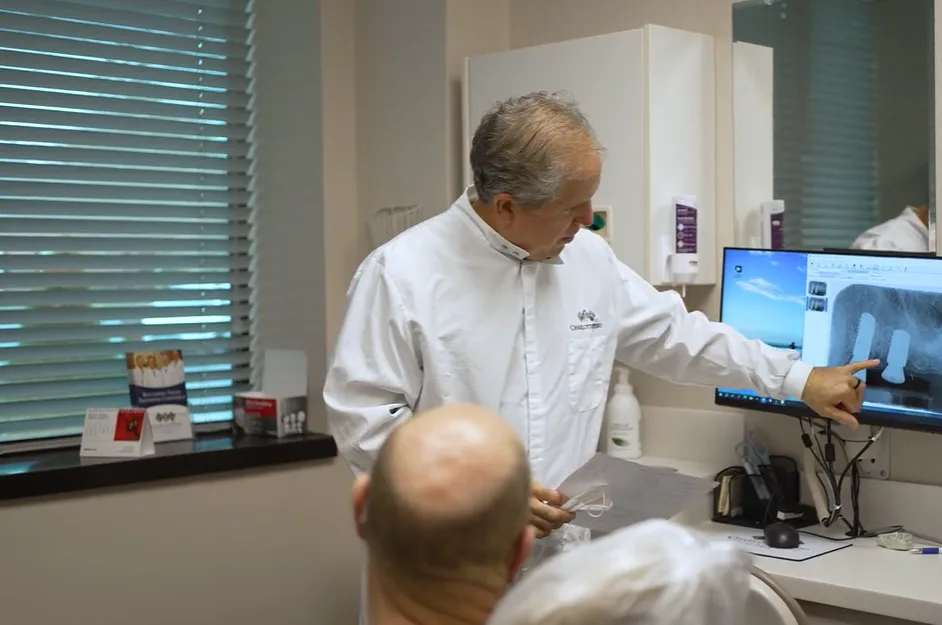
If you're in your 70s, 80s, or beyond and are considering dental implants, age alone does not determine whether you are a candidate for treatment.
For older adults, the more important considerations are overall health, gum and bone health, medications, medical conditions, oral hygiene, and the body's ability to heal following surgery.
A comprehensive periodontal and medical evaluation can help determine whether dental implants are an appropriate option and whether any additional treatment may be needed before implant placement.
Key Takeaways: Dental Implants for Seniors
- There is no single upper age limit for dental implant treatment.
- Bone volume and quality are important factors in determining implant candidacy.
- Medical conditions and medications should be carefully reviewed before treatment.
- Bone grafting or other procedures may be recommended when there is not enough bone to support an implant.
- Dental implants can help maintain bone around the implant site after tooth loss.
- Healing and treatment timelines vary from patient to patient.
- A thorough evaluation is more important than chronological age when determining whether implants are appropriate.
Are Dental Implants an Option for Older Adults?
Yes. Many older adults can be candidates for dental implants when their oral and general health support treatment.
Chronological age by itself does not provide enough information to determine whether implant surgery is appropriate. Instead, a periodontist evaluates factors such as:
- Bone volume and quality
- Periodontal and gum health
- Overall medical health
- Medications
- History of smoking or tobacco use
- Oral hygiene
- Ability to heal following surgery
- Ability to maintain the implant over time
These factors help determine both the potential benefits and the risks of treatment.
Patients who want to understand the factors that may affect candidacy can review this guide on what makes someone a good candidate for dental implants.
What Is Osseointegration?
Osseointegration is the biological process through which the jawbone forms a direct connection with the surface of a dental implant. This connection creates the stable foundation needed to support the final crown, bridge, or prosthesis.
Healing capacity can vary among older adults just as it does among younger patients. Bone quality, medical conditions, medications, nutrition, smoking history, and other individual factors may all influence the healing process.
For this reason, implant timelines are determined based on the individual patient rather than age alone.
Bone Health and Dental Implant Candidacy
One of the most important factors in implant treatment is whether there is enough healthy bone to support the implant.
After a tooth is lost, the bone that once supported that tooth can gradually decrease in height and width. The amount of bone loss varies depending on how long the tooth has been missing, the condition of the surrounding tissues, previous infection, periodontal disease, and other factors.
Bone loss does not necessarily prevent implant treatment. Depending on the location and extent of the deficiency, additional procedures may be considered.
These can include:
- Bone grafting to rebuild bone volume
- Sinus augmentation when additional bone height is needed in the upper back jaw
- Ridge augmentation to restore areas of deficient jawbone
- Guided bone regeneration to support bone formation in selected cases
The appropriate approach depends on the anatomy of the area and the goals of treatment.
How Do You Know If You Have Enough Bone for an Implant?
Your periodontist will evaluate your mouth clinically and may use three-dimensional imaging, such as a cone-beam CT scan, when appropriate.
This type of imaging can provide detailed information about the height, width, and anatomy of the available bone as well as nearby structures that need to be considered during treatment planning.
If there is not enough bone for predictable implant placement, your periodontist can discuss whether bone grafting or another treatment approach may be appropriate.
Patients can also learn more about the dental implant process to better understand how evaluation, planning, placement, and healing may fit together.
Medical Conditions and Dental Implant Treatment
Medical conditions become increasingly important to consider as patients age, but having a chronic health condition does not automatically prevent someone from receiving dental implants.
What matters is the specific condition, how well it is controlled, the medications being taken, and how those factors may affect surgery and healing.
Diabetes
Patients with well-controlled diabetes may still be candidates for dental implants. Poorly controlled diabetes can affect healing and may increase the risk of postoperative complications.
Because diabetes can also affect periodontal health, patients may benefit from understanding the relationship between diabetes and periodontal disease when discussing their overall oral health with their dental team.
Osteoporosis
Osteoporosis alone does not necessarily prevent implant treatment. However, certain medications used to treat osteoporosis or other bone conditions can affect treatment planning.
Your periodontist will review the specific medication, dose, duration of treatment, and reason it was prescribed and may coordinate with your physician when appropriate.
Cardiovascular Conditions
Heart and vascular conditions should be evaluated individually. Your periodontist will review your medical history and medications and may communicate with your physician when additional information or medical guidance is needed before treatment.
Dry Mouth
Dry mouth is common in older adults and may be related to medications or medical conditions. Although it does not automatically prevent implant treatment, adequate oral hygiene and ongoing professional maintenance become particularly important.
The goal is not simply to determine whether a medical condition is present. It is to understand how the patient's overall health may affect treatment and healing.
Dental Implants vs. Dentures for Older Adults
Dental implants and traditional dentures are both established options for replacing missing teeth, but they function differently.
Traditional dentures rest on the gums and replace the visible portion of missing teeth. Because they do not replace the tooth roots, the jawbone can continue to change over time following tooth loss.
Dental implants are placed within the jawbone and transfer functional forces to the surrounding bone. This can help maintain bone around the implant site.
However, implants also require surgery, sufficient bone and healing capacity, daily oral hygiene, and ongoing professional maintenance.
The best option depends on the patient's anatomy, medical health, treatment goals, preferences, and ability to maintain the restoration long-term.
For a more detailed comparison of replacement options, see implants versus dentures and bridges.
Dental Implant Options for Seniors
Dental implant treatment does not necessarily mean replacing every missing tooth with an individual implant.
Depending on the number and location of missing teeth, options may include:
- Single-tooth implants — replacing one missing tooth without using adjacent teeth for support
- Implant-supported bridges — using implants to support replacement teeth across an area where several teeth are missing
- Implant-supported overdentures — using dental implants to improve the stability and retention of a removable denture
- Fixed full-arch implant restorations — using multiple implants to support a fixed prosthesis for an entire arch of missing teeth
The number and position of implants needed are determined by the patient's anatomy, bone availability, bite, restorative plan, and other clinical factors.
Healing After Dental Implant Surgery
Healing after implant surgery varies considerably from one patient to another.
Age can be one consideration, but it is only one part of a much larger clinical picture. Bone quality, the location of the implant, whether grafting was performed, medical conditions, medications, smoking history, and the complexity of the procedure can all affect healing.
Some patients may be ready for the restorative phase sooner than others.
Your periodontist will monitor healing and determine when the implant has reached an appropriate level of stability before the restorative dentist proceeds with the final restoration.
Understanding the dental implant recovery process can help patients prepare for the healing period and understand why recovery timelines may vary.
When Might Dental Implants Not Be the Best Option?
Dental implants are not appropriate for every patient, regardless of age.
An alternative treatment may be recommended when:
- A medical condition makes elective surgery inadvisable
- Available bone is insufficient and the patient does not wish to pursue grafting
- The risks or treatment requirements outweigh the expected benefit
- Maintaining adequate oral hygiene would be difficult
- Another restorative option better meets the patient's needs and goals
An individualized evaluation allows these considerations to be discussed before treatment begins.
At CharlottePerio, our board-certified periodontists work closely with each patient's general dentist or prosthodontist to coordinate implant care. When appropriate, we also communicate with a patient's physician to better understand medical considerations that may affect treatment.
CharlottePerio provides the surgical evaluation and, when needed, procedures such as tooth extraction, bone grafting, and dental implant placement. After healing, the restorative dentist fabricates and places the final crown, bridge, or prosthesis.
The Bottom Line
Being older does not automatically mean that dental implants are no longer an option.
The decision is based on much more than age. Bone and gum health, medical conditions, medications, oral hygiene, healing capacity, and treatment goals all play an important role.
A comprehensive evaluation with a periodontist is the best way to determine whether dental implants are appropriate and what treatment approach offers the most predictable path forward.
CharlottePerio has provided periodontal and implant care in the Charlotte community for more than 50 years. Our board-certified periodontists work collaboratively with restorative dentists to coordinate surgical treatment, healing, restoration, and long-term periodontal maintenance.
Frequently Asked Questions on Dental Implants for Seniors
Are dental implants safe for seniors?
Many older adults can safely receive dental implants when their oral and general health are appropriate for treatment. Age alone does not determine candidacy. A periodontist will evaluate bone and gum health, medical conditions, medications, healing capacity, and other individual factors before recommending treatment.
Is there an age limit for dental implants?
There is no single upper age cutoff for dental implant treatment. Candidacy is based more heavily on a patient's health, available bone, periodontal condition, and ability to undergo and maintain treatment.
Can seniors with bone loss still receive dental implants?
Possibly. Bone loss is common after teeth have been missing for an extended period, but bone grafting and other regenerative procedures may make implant placement possible in some cases. Your periodontist can determine whether additional bone is needed after examining the area and reviewing appropriate imaging.
Can someone with diabetes or osteoporosis receive dental implants?
Potentially. These conditions do not automatically exclude a patient from implant treatment. Their severity, level of control, medications, and potential effect on healing must be considered individually.
Does implant healing take longer in older adults?
Healing time varies widely and cannot be determined by age alone. Bone quality, medical health, medications, the location of the implant, grafting procedures, and other factors can affect the timeline.
Are dental implants better than dentures for seniors?
Neither option is universally better. Implants may provide increased stability and can help maintain bone around the implant site, while traditional dentures avoid implant surgery and may be appropriate for some patients. The right choice depends on anatomy, health, goals, preferences, and long-term maintenance considerations.
Contact Us
We provide exceptional dental care tailored to your needs.
Contact Us at: (704) 365-0123
Fax: (704) 364-8640
Email: info@charlotteperio.com
Get in Touch
*Name
*Your Email
*Your Phone Number
Additional Information

Our Professional Affiliations



© 2026 CharlottePerio. All Rights Reserved | Notice of Privacy Practices | Digital Marketing by Remedo